
Rating of the best septic tanks for 2025
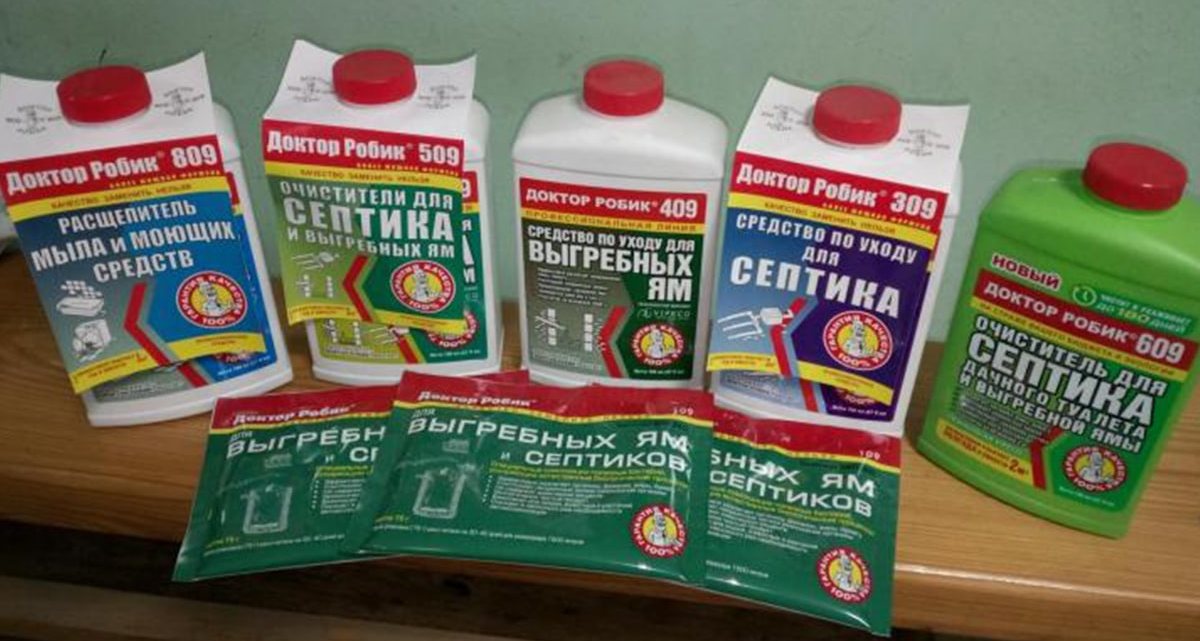
The issue of choosing the best drug for a septic tank (cesspool) is especially acute for residents of country houses and owners of residential buildings. which are not connected to the centralized sewerage system. The most important problem for them is the disposal of sewage waste, food waste, volumes of used water, etc. It is quite possible to dispose of such effluents through the operation of sewage equipment, but this option seems to be very costly and it will not be possible to carry out such an operation noticeably, because an unpleasant odor will spread throughout the district during the operation of the machine. The solution may be the use of special powders or bacteria (biologically active bactericides), which will cope with the disposal of wastewater in a civilized manner and without leaving any extra traces.Their use will not harm either humans or the environment, however, before use, the nature of the wastewater to be treated should be taken into account in order to select a composition with the desired properties.
Content
- 1 Appointment of cleansing antiseptic preparations
- 2 Tasks that are designed to solve cleaning antiseptic preparations
- 3 Modern types of preparations for chemical cleaning of pits and septic tanks
- 4 Modern types of preparations for biological cleaning of pits and septic tanks
- 5 Difficulties of choice
- 6 Rating of the best septic tanks for 2025
- 7 Conclusion
Appointment of cleansing antiseptic preparations
According to its structure, effluents are an organic mass, the decomposition of which will require the active activity of bacteria.If you do not use special preparations to speed up this process, then it can take a significant amount of time, delivering unnecessary problems to the owner of the septic tank / cesspool. When selecting a working composition, it should be taken into account that wastewater contains a certain amount of certain chemical compounds that may be hazardous to living organisms. From this it is clear that a correctly chosen agent should contain in its structure precisely those “sleeping” bacteria that, when interacting with specific chemicals, “wake up” and begin to actively decompose them. At the same time, the environment must also have certain parameters.
Thus, septic materials may differ in their mode of action. For example, expensive biobacteria begin to decompose feces, turning them into compost, which can then be used as fertilizer for agricultural needs. At the same time, it is always worth remembering that the septic facility itself must be resistant to various wastes, for example, if the latter contain residues of household chemicals (waste water from washing machines and dishwashers). If such waste is present, then the septic preparation must be able to neutralize them, otherwise the result of processing as a fertilizer cannot be used. Some owners of country houses prefer to use the old method and use bleach, but it will not be a panacea for the task at hand. Naturally, it will help get rid of the smell, but the accumulated mass of waste cannot be used anywhere, and in general bleach will have a negative impact on the surrounding land.
Tasks that are designed to solve cleaning antiseptic preparations
Due to the content of dormant active biological bacteria in its composition, these substances will solve the following problems:
- They will help to eliminate unpleasant odors, the cause of which is the process of organic decomposition of waste products;
- Contribute to the cleaning of drain channels;
- They will speed up the process of processing / decomposition of solid fractions, which will reduce their share in the total waste mass, which means that there is no need for mechanical cleaning of the septic tank or cesspool;
- They will allow you to keep the system of suburban sewerage in proper cleanliness, because the drug can enter the septic tank / cesspool not directly, but, for example, through the toilet drain.
Modern types of preparations for chemical cleaning of pits and septic tanks
Chemical cleaning agents are divided into the following groups:
- Based on ammonium salts - they can perfectly cope with a painful smell, while dissolving waste at an accelerated pace. It is worth mentioning that they are simply incompatible with cleaning materials, so there should be no soapy water waste in the treated drain.
- Nitrate-based oxidizers - nitrogen is the basis for them. Such preparations are environmentally friendly, perfectly liquefy the waste mass, making it almost homogeneous. They do not have a negative impact on the walls of the septic tank and do not corrode it. They are quite expensive.
- Caustic soda is an alkaline powder or granules. Corroding organic matter, releases a toxin;
- Lime chloride - successfully decomposes solid fragments, temporarily eliminating the painful smell. Not suitable for use with microorganisms, harmful to the environment;
- Formaldehyde is probably the strongest formic acid septic tank cleaner. It has excellent antiseptic/antibacterial properties. However, it is extremely toxic to humans and nature.
Modern types of preparations for biological cleaning of pits and septic tanks
The considered type of sanitary materials provided on the Russian market may differ both in the form of manufacture and in their composition. It is issued:
- In the form of tablets;
- In the form of powders or granules;
- In the form of a concentrated solution, which is immediately ready for use.
If we talk about the level of effectiveness, then there is not much difference between them, the main thing is that they need to be applied in appropriate conditions. For example, liquid solutions are recommended to be immediately poured into a septic tank or into a cesspool. Powdered substances must first be diluted in water, let them brew under certain conditions, and then poured into the drain or directly into the pit / septic tank. Tablet forms are more intended for use specifically in cesspools and their main purpose is to process waste into compost for its subsequent use. From this it is clear that they do not need to be thrown into a septic tank that has solid metal / plastic walls.
Technical specifications
Any sanitary preparation used to clean cesspools and septic tanks has a number of basic technical parameters:
- The type of active biobacteria - this parameter determines what waste the drug can deal with, and what is required for their effective action in terms of environmental conditions.
- The concentration level of the active substance - this indicator reflects how often the re-use of this composition will be required, as well as the rate of decomposition of waste organic matter.
- Estimated volume - it indicates the amount of the drug that will be required to process a certain mass. For some types of sanitary materials under consideration, it is necessary to use large doses so that the bacteria can quickly form their colony and more successfully complete the task, while for other types it is recommended to use in small volumes, because microorganisms can begin to devour each other, eventually destroying the entire colony completely.
- Shelf life - like any microorganism, even "sleeping" bacteria have their own lifespan. The use of expired products means the use of dead bacteria, from which the cleansing effect will not occur.
IMPORTANT! The "dry residue" parameter should also be taken into account. It means a product of the vital activity of bacteria and the lower its percentage, the more effective the remedy. During the first application, the so-called "initial" means should be used, which will help form the basis of the colonies and further develop the processing activity more successfully during the second cleaning.
Anaerobic and aerobic bacteria - differences and principle of operation
Two types of bacteria are used in septic agents:
- Anaerobic - they do not require the presence of air space around for life and work;
- Aerobic - oxygen is vital for them to work.
There are also combined options on the market, which, in addition to direct bioactivators, additionally include complex enzymes.I work not only on organics, they do an excellent job of processing multi-level chemical compounds, various fats, solid tissue or paper fragments.
It should be noted that anaerobic bacteria are used in closed septic tanks, and aerobic bacteria - in open cesspools. If the material is not combined, then the place of its application must necessarily correspond to its intended purpose.
For example, anaerobic bacteria act on the principle of rotting wastewater, as a result of which they are clarified. Solid fractions in this process go into a silty sediment, which must be periodically removed from the tank. During such a procedure, precautions must be observed, because during the putrefactive process in an isolated space (in a tank), methane is intensively produced. The use of anaerobic-based materials provides 50-70% effluent treatment, so further treatment can be completed purely mechanically. Nevertheless, based on the basic principles of biology, aerobic substances are more effective, since they use additional amplifying catalysts in the form of oxygen in the purification process. Sometimes, even additional air injection into the pit is recommended, for which special compressors are used.
IMPORTANT! It is always worth remembering that anaerobes, when working, emit a large amount of heat, coupled with carbon dioxide, which can be unsafe. Aerobes, on the other hand, operate in the open air, to which they give off the generated heat and which successfully liquefies carbon dioxide. The result will be the formation of high-quality compost.
Features of the use of bioactive materials
When using biologically active preparations, in order to clean cesspools and tanks, it is necessary to monitor the presence of certain conditions under which the process will be as efficient as possible:
- The ambient temperature in the tank / pit - it should be +4 +5 degrees Celsius (the upper limit, in principle, does not exist, but +30 degrees Celsius can be called the optimum).
- The supply of fresh effluents is a necessary condition, since the colony needs to maintain its vital activity even at a minimum level in order to be able to quickly deploy for reuse. If the condition is not met, then the colony will quickly die, and in winter it will simply freeze.
- Maintaining a moist environment - Microorganisms will need to maintain a certain level of humidity for the life of microorganisms, therefore, to avoid drying out of the pit, some periodic moistening is required. And for the reservoirs, a small amount of new effluent will be enough.
- The presence of chemical components dangerous for cleaning bacteria in the waste - this condition must also be monitored on an ongoing basis, because some chemically aggressive substances that have fallen into the drains will very quickly destroy the entire bioactive colony.
As for the last condition, it seems to be the most important, because the ingress of some medicinal waste into the drain, as well as the combined use of bioactivators with bleach, will bring the entire purification process to naught. At the same time, it should be understood that cleaning materials cannot cope with the dissolution of metal, plastic and other municipal solid waste, therefore, dumping the latter into a pit / tank is strictly prohibited.The same may apply to detergents that contain potassium permanganate - it can get with the used water when washing drains and sewer channels. Accordingly, in order to avoid the situations listed above, it is necessary to select such substances that are able to tolerate all possible unintended negative effects of foreign substances in the waste. And those are just the combination drugs. In any case, the effective operation of bioactivators will be realized only when the owner of the house takes into account the features of the shape of the pit or the design of the tank, as well as monitors and regulates the composition of incoming wastewater.
IMPORTANT! If the microorganisms still died, or their work clearly slowed down, be sure to add an additional portion of the cleaning mixture. As a rule, a pit or reservoir is actively used during the warm period of the year, respectively, before it begins, you need to be ready to populate these spaces with new cleaning organisms.
Difficulties of choice
When choosing drugs for chemically oriented action, you should rely on the following points:
- If it is not planned to mechanically dispose of the accumulated waste mass, then you need to choose the most powerful preparation that can successfully corrode large fragments;
- If it is supposed to turn waste into compost, then the chemical should be compatible with the bioactivator and not have great strength (ideally, a nitrate oxidizer);
- If the tank or pit is in close proximity to fruit crops, then the use of formaldehyde or bleach is strictly prohibited (plants will easily die from the penetration of chemically aggressive substances into the nearby soil).
When choosing drugs of biologically oriented action, one should rely on the following points:
- Bioactivators will work only when the liquid level exceeds the solid content. Even combined preparations must be diluted with water;
- Each biologically active cleaning agent should be used only in the amount and under the conditions recommended by its manufacturer (information is indicated on the package). If the pit / tank does not fit the specified conditions, then buying the material will be a waste of money;
- A good biological product will give the first result of its work after a maximum of 3 days. If this situation is not observed, then a fake may have been purchased.
Rating of the best septic tanks for 2025
Budget segment
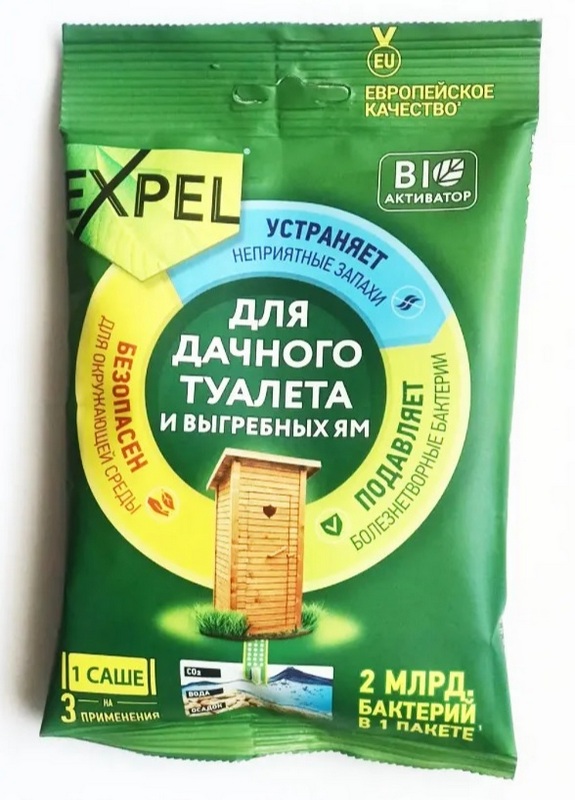
3rd place: "EXPEL for septic tanks, cesspools and country toilets"
This tool is designed to accelerate the decomposition of organic waste and eliminate unpleasant odors in country toilets, latrines and septic tanks. The activator contains concentrated cultures of bacteria that successfully decompose fecal matter into water, carbon dioxide and the corresponding salts. It also reduces the volume of sediment content, inhibits the growth of pathogenic microbes. The recommended cost for retail chains is 86 rubles.
Advantages:
- Increase in dosage is allowed;
- Regular use will enhance the effect;
- The carrier makes up more than 30% of the composition.
Flaws:
- Not detected.
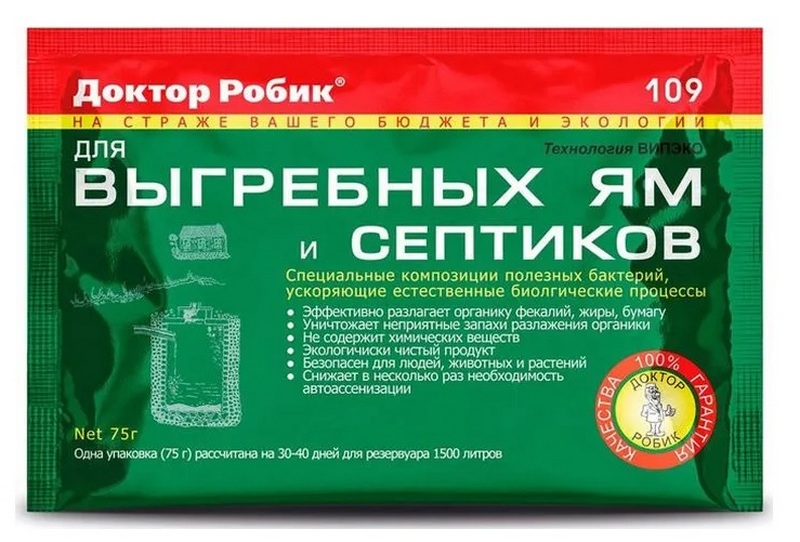
2nd place: "Doctor Robik" for cesspools and septic tanks No. 109 "
Soil cultures, placed in spores and included in this material, are able to utilize paper, feces, fats, proteins, cellulose, urea, and starch within a short time.Monthly use will avoid clogging of pores in the ground, the formation of fossils and insoluble organic fragments in septic tanks and cesspools. Thanks to its formula, the substance accelerates the natural biological processes of decomposition. One package is designed for 30-40 days for a 1500 liter tank. The recommended cost for retail chains is 110 rubles.
Advantages:
- Small expense;
- Innovative action formula;
- Wide range of degradable substances.
Flaws:
- Not detected.
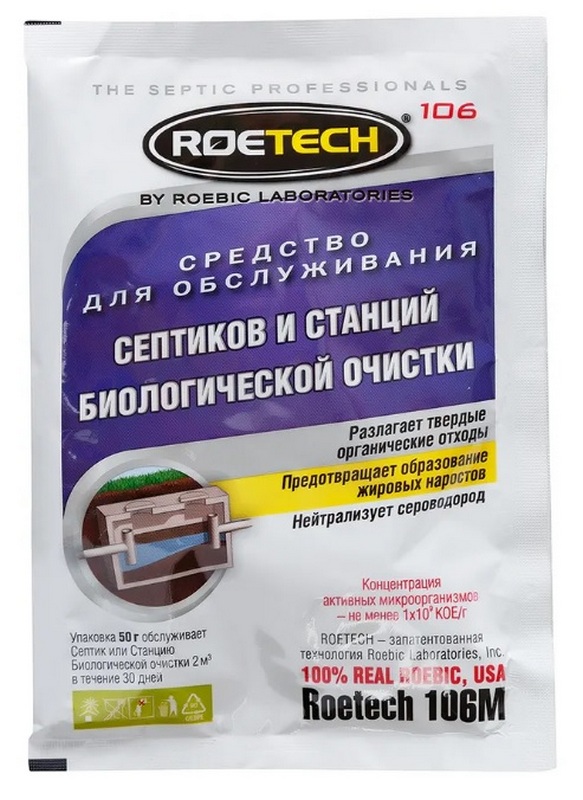
1st place: "Roetech 106M" 50 g of bacteria for septic tanks and biological treatment plants"
This potent blend contains 6 specialized bacteria. They have been developed for the direct disposal of even those substances that are difficult to decompose and are not biodegradable. The tool will be able to utilize fats, fabrics, detergents and phenols. Use within 30 days reduces the need for pumping, increases solids utilization, cleans and eliminates odor. Reduces several times the need for auto-cleaning. The recommended cost for retail chains is 250 rubles.
Advantages:
- Specially developed formula;
- Using it will allow you not to use auto-asinization;
- Adequate cost.
Flaws:
- Not detected.
Middle price segment
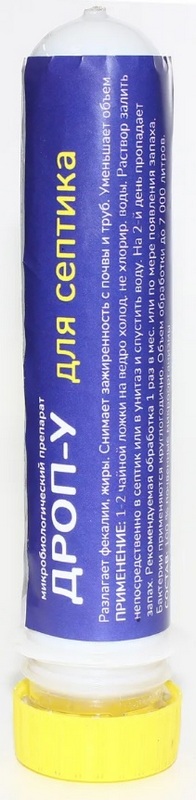
3rd place: "Bacteria for the DROP-U septic tank"
Such a preparation neutralizes / decomposes feces, fats and other substances. Reduces waste volume - less need for mechanical pumping. 1-2 teaspoons will be enough for a bucket of cold (and without chlorine) water.The working solution must be poured directly into the septic tank or into the toilet, and then flushed. After treatment, on the 2nd day, the unpleasant odor disappears. The recommended frequency of processing is 1 time per month (or as the smell appears). Bacteria can live year-round under certain conditions. The recommended cost for retail chains is 333 rubles.
Advantages:
- 100% natural soil microorganisms;
- Increased concentration;
- Large volume processing capability.
Flaws:
- Small container.
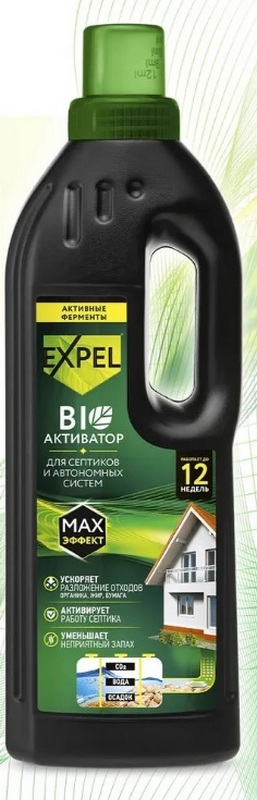
2nd place: "Expel liquid bioactivator for septic tanks and autonomous systems, 750 ml"
The composition of enzymes in this material activates the work of the septic tank and accelerates the processing of organic waste - proteins, fats and other things. Ideal for the anaerobic conditions of a septic tank, and the composition of bioactive components suppresses the burdensome odor, while reducing the amount of solid sediment, reducing the need for auto-disposal. It is important to note that, unlike bacteria-based liquid bioactivators, the Expel formula allows you to safely use a product that will be effective throughout its shelf life. The recommended cost for retail chains is 350 rubles.
Advantages:
- Accelerates the decomposition of proteins, fats and other waste;
- Reduces the volume of solid sediment;
- Reduces unpleasant odor;
- Reduces the need for auto sanitation.
Flaws:
- A somewhat weak container body - requires careful use.
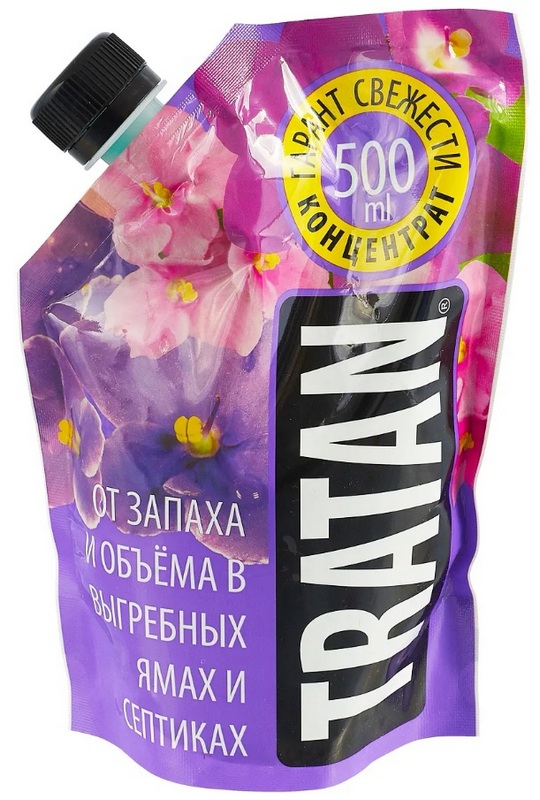
1st place: "Tratan", 500 ml.
The composition is used to remove fecal odors, as well as cadaveric, vomit, rotting odors in dry closets, toilet buckets, toilets with a retractable tub, cesspools, cottage local sewage systems, and can also be used for utility and residential premises, car interiors. Particularly effective for removing odors from porous surfaces, wooden structures in old outdoor toilets, cement coatings, dirt floors. The advantage of the product: it does not freeze and is not afraid of draining detergents. The recommended cost for retail chains is 360 rubles.
Advantages:
- Perfume composition;
- Can be used to make compost;
- The basis of the composition is mineral fertilizers.
Flaws:
- Not applicable to large volume cleaning.
Premium class
3rd place: "Bacteria for a septic tank, cesspool, pipes, soap splitter, detergent bioactivator "Doctor Robik 809", 798 ml"
The agent contains soil bacteria in spores, at least 6 species, including enzymes, bacteria, surfactants. It is used for septic tanks, dry closets and cesspools. The release form of the product is a liquid. The recommended cost for retail chains is 580 rubles.
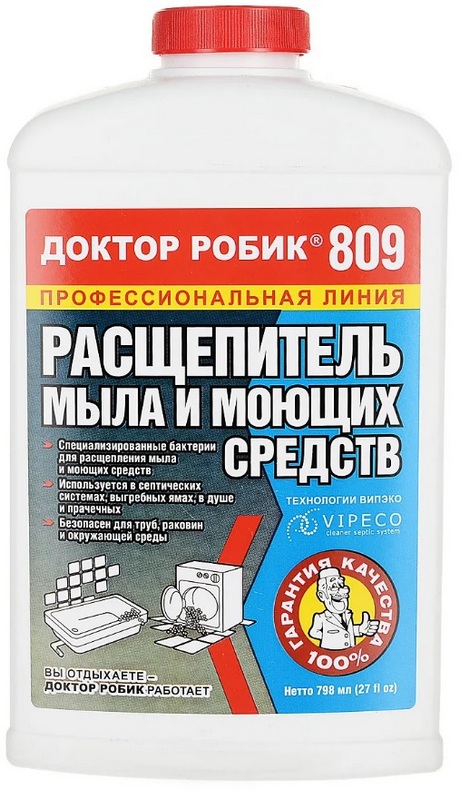
Advantages:
- Completely eco-friendly composition;
- Possibility of splitting soap drains;
- Excellent value for money.
Flaws:
- Not detected.
2nd place: "Summer and Winter", bioactivator for cesspools and country toilets"
Liquid easily eliminates a specific smell in 15 minutes. Works in any conditions. An excellent solution for rustic toilets, septic tanks and pit latrines in winter.Does not lose its properties when household chemical substances, including chlorine, enter the tank. Revitalizes drainage within 2 weeks. Removes fat content from the soil, from the bottom of the cesspool, from the walls of the septic tank. The content of the cesspool / septic tank is reduced in volume, as a result of which pumping is required 2-5 times less often. The recommended cost for retail chains is 650 rubles.
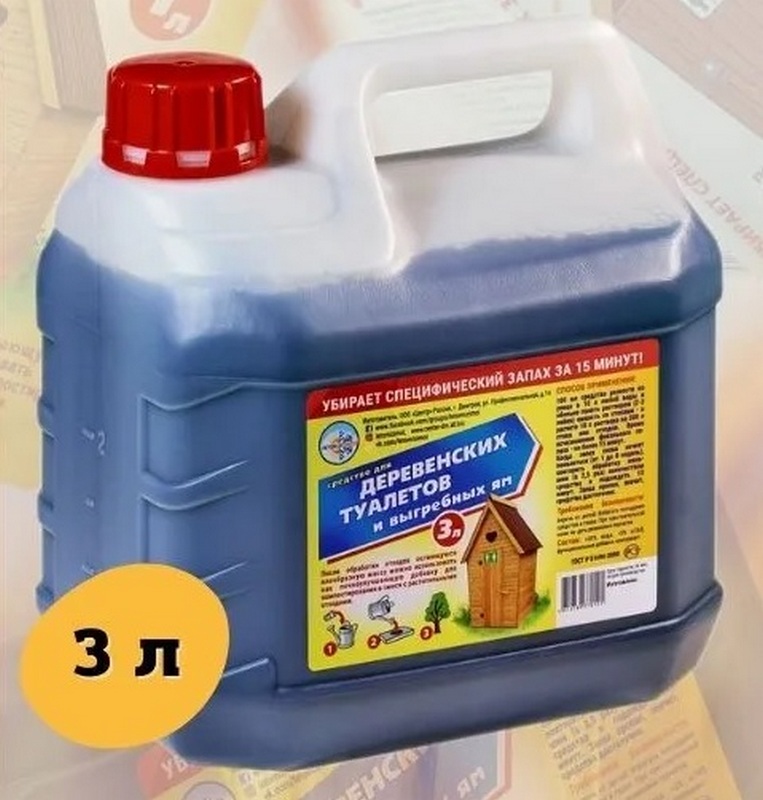
Advantages:
- Large volume;
- The presence of a huge number of functional inclusions;
- Convenient container.
Flaws:
- Not detected.
1st place: "BIOFORCE Septic Comfort 672 g (12x56 g) for septic tanks"
This mixture consists of beneficial natural bacteria, nutrients, amino acids, minerals, enzymes. The release form - powder, is used exclusively for septic tanks and fully restores the operation of septic systems, which then do not need mechanical cleaning. The recommended cost for retail chains is 1170 rubles.
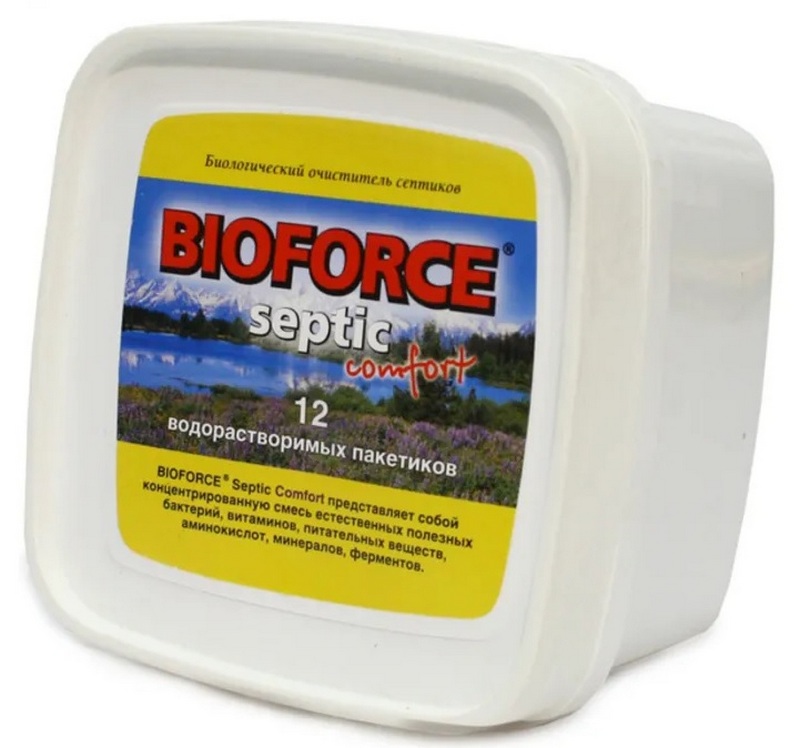
Advantages:
- Profitability;
- Wide temperature limits of operation (from +5 to +50 degrees Celsius);
- biological basis.
Flaws:
- Not detected.
Conclusion
In order to ensure the efficient operation of local sewer facilities, special cleaning preparations should always be used in them. Their main goal is to speed up the process of decomposition of the waste mass, either completely destroying it or turning it into useful compost. However, chemicals will never create good compost and should be used with care, while biological products, although they cost a little more, work more efficiently, safely and economically.
new entries
Categories

The best men's sneakers in 2025
Views: 124042
The Best Complex Vitamins in 2025
Views: 121945



The best thermoses and thermo mugs in 2025
Views: 19129

Useful
Ranking of the best vacuum sealers for 2025
Views: 1940
Rating of the best electric hobs for 2025
Views: 2342

Best Antivirals in 2025
Views: 33338
Top 15 hoverboards of 2025. Decent value for money
Views: 29342
Popular Articles
-

Top ranking of the best and cheapest scooters up to 50cc in 2025
Views: 131658 -

Rating of the best soundproofing materials for an apartment in 2025
Views: 127698 -
Rating of cheap analogues of expensive medicines for flu and colds for 2025
Views: 124525 -
The best men's sneakers in 2025
Views: 124042 -
The Best Complex Vitamins in 2025
Views: 121945 -

Top ranking of the best smartwatches 2025 - price-quality ratio
Views: 114984 -

The best paint for gray hair - top rating 2025
Views: 113401 -

Ranking of the best wood paints for interior work in 2025
Views: 110326 -
Rating of the best spinning reels in 2025
Views: 105334 -

Ranking of the best sex dolls for men for 2025
Views: 104373 -

Ranking of the best action cameras from China in 2025
Views: 102222 -
The most effective calcium preparations for adults and children in 2025
Views: 102016