
Rating of the best hand and monitor fire nozzles for 2025
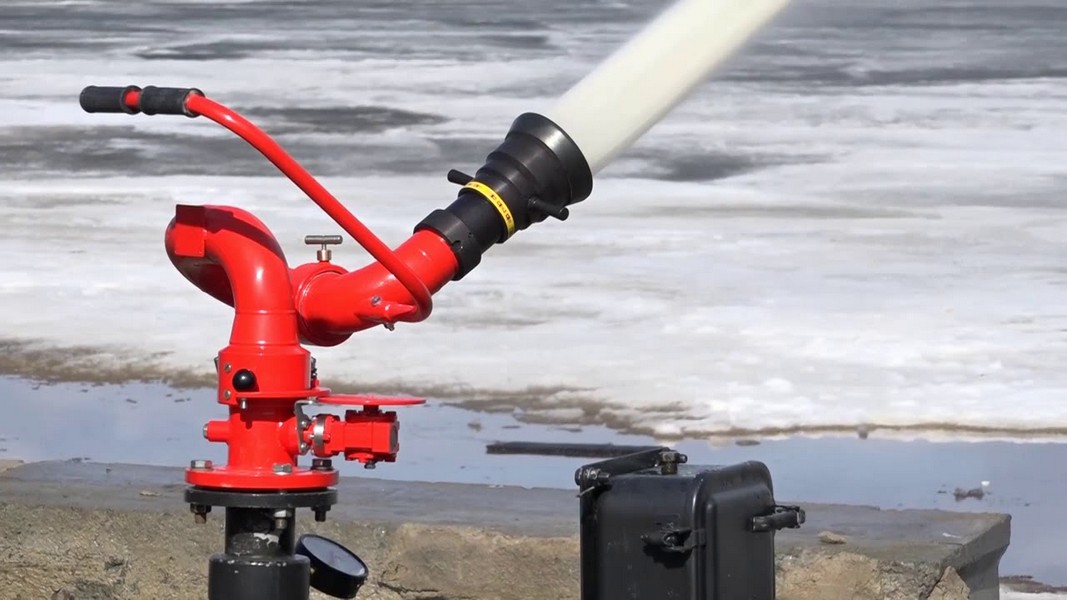
Fire barrels are the tool by which extinguishing agents are supplied to the source of fire. Such fire fighting equipment currently in service also has an additional function - the jet supplied by it can be sprayed, continuous, compact, and also have other variations. Manufacturers offer different types of fire weapons in design, differing from each other in size, barrel diameter, throughput volume, general configuration, and principle of operation.The main requirements for the barrels directly are enshrined in the Fire Safety Norms No. 177 of 1999 (177-99) and are indicated in the performance characteristics of the devices themselves.
Content
- 1 Functional purpose of fire hoses (PS)
- 2 Classification of types of trunks
- 3 The principle of operation and the device of manual and carriage models
- 4 Advanced models of fire monitors
- 5 Fire nozzles and their performance characteristics
- 6 Rules for using the trunk
- 7 Technical regulations of barrels as fire-technical weapons
- 8 Differences and features of air-foam barrels from foam generators
- 9 Safety and maintenance rules for working with barrels using foam agents
- 10 Rating of the best hand and monitor fire nozzles for 2025
- 11 Instead of an epilogue
Functional purpose of fire hoses (PS)
These devices are used to equip fire hoses installed on hydrants, pumps, columns, taps, fire tanks and other things. They are responsible for the formation and directed supply of the extinguishing jet. The area that can be covered by fire monitors or manual trunks is determined by the type of this device. The most modern models allow the extinguishing liquid to be supplied over very remote distances, which ensures maximum safety for the extinguishing operator.
IMPORTANT! In everyday life, it is quite possible to replace the term "barrel" with the words "water hose" or "liner". However, among professional firefighters, such a replacement is UNACCEPTABLE!
Classification of types of trunks
These include:
- Fire liners are manual - they are used to extinguish fires manually. The depth of operation of such devices does not exceed 5 meters. In order for a manual hose to work with different types of extinguishing agents, special nozzles can be installed on it. As a rule, manual models are used to destroy the initial stages of a fire, and they are ineffective in large-scale fires.
- Fire monitors - such equipment is usually installed on special towers or fire trucks. They are distinguished by the installation height, the presence of various nozzles by default, as well as the possession of various regulatory mechanisms. Especially their combined models show their high efficiency, capable of delivering a spray jet at a certain angle, which, simultaneously with extinguishing, protects the fire specialist.
IMPORTANT! The procedure for the operation of this fire weapon, its maintenance and operation is regulated by the State Standards (GOST R) No. 51115 of 1997, No. 9923 of 1993, No. 53331 of 2009.
Fire monitors and their marking
Their characteristics and types can be determined by the appropriate marking:
- "B" - devices mounted on trailers. They have a rotating platform, which increases the range of their action.
- "C" - stationary devices, they are equipped with internal fire hydrants. However, in special cases, they are allowed to equip mobile fire equipment and towers.
- "D" - samples with remote adjustment, which means the ability to remotely control some functions, for example: on / off, pressure of the extinguishing agent, direction of the jet, water volume flow, etc.
- "P" - a unique mobile device, optimal for pumps.
Hand barrels and their marking
According to a competent reading of the brands of these hoses, you can quickly determine their purpose. Here are some of the most common options:
- "RS-50", "50P", "70" - they belong to the category of removable samples, which means it is possible to quickly lengthen the line by adding individual hose links, as well as maintain / change a continuous jet.
- "RS-50.01" or "70.01" - refer to non-removable options, capable of forming a continuous type of water flow, the pressure of which cannot be adjusted.
- "RSP", "SRP", "RSK" - belong to a series of transportable devices that can be used exclusively at an angle (again - the moment of ensuring the safety of the fire operator). They can be equipped with a variety of nozzles, including nozzles for the supply of extinguishing foam agents.
- "RSKZ-70" - one of the types of hose tools, is a highly efficient and versatile device. It can be easily connected to fire-fighting water pipelines at objects of various levels of complexity, allows you to control the configuration and parameters of the jet, and calmly interacts with any extinguishing agents.
The principle of operation and the device of manual and carriage models
The standard design of the fire barrel includes several functional elements:
- Housing made of brass, aluminum or plastic.
- A coupling head for a hose, which can be a coupling, a hose or a clevis.
- Nozzles responsible for the shape of the jet.
- Couplings for connection with other devices (for example, sprayers or foam generators) or additional fittings.
- Other accessories such as a carrying strap.
According to the performance characteristics and the type of substance used, manual models and fire monitors can be classified as follows:
- Devices that create a relatively small but powerful flow.
- Modifications equipped with a tap to shut off the water / substance supply.
- Universal tools.
- Versatile tools capable of creating a fireproof curtain.
- Combined devices.
- Low expansion foam equipment.
- Foaming devices - they are also foam equipment of increased expansion.
Advanced models of fire monitors
These include the following types:
- Stationary;
- Portable;
- Stationary on remote control;
- Robotic.
Stationary
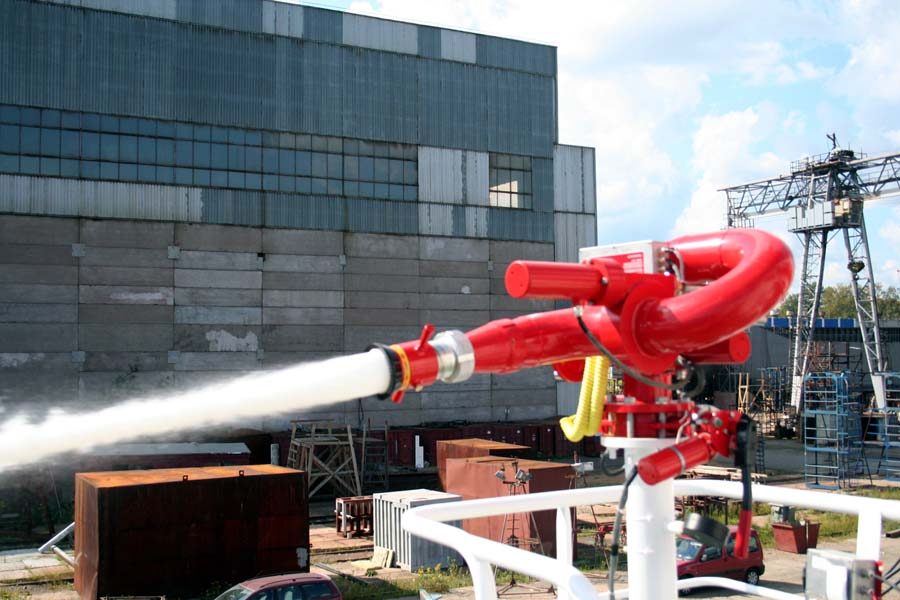
This equipment is installed on a special platform or directly on the roof of mobile fire equipment. Direct supply of water or other extinguishing agent is carried out with the help of special control elements, which are manually adjusted by the operator. Models of such barrels are capable of producing both sprayed and continuous jets, and can also combine these extinguishing methods. In addition, there are modifications that create a fireproof curtain for the fire specialist.
Their positive properties include a high intensity of water supply, and they do not require a grenade launcher (second operator) to control them. On the downside, we can say that such a model is low-mobile and problematic in maintenance. A striking example is the barrel "LS-S20Uze".
The above abbreviation can be deciphered as follows:
- "LS" - fire monitor.
- "C" - stationary placement.
- "20" - water consumption in liters / second.
- "U" - universal, that is, it has the ability to form various jets of water.
- "ZE" - has the ability to set up a protective curtain.
The design of stationary fire monitors consists of the following parts and mechanisms:
- Base installation;
- Frame;
- Nozzle;
- Inlet pipe placed on the support;
- Outlet pipe;
- Movable hinge;
- fixing element;
- Handle.
Portable
They are distinguished by special mobility and the possibility of supplying fire extinguishing agents to hard-to-reach places for large equipment. Since the time of the Soviet Union, the PLS-P20 model has been used on the territory of our country, this abbreviation stands for the same as above, where the letter “P” means portable.
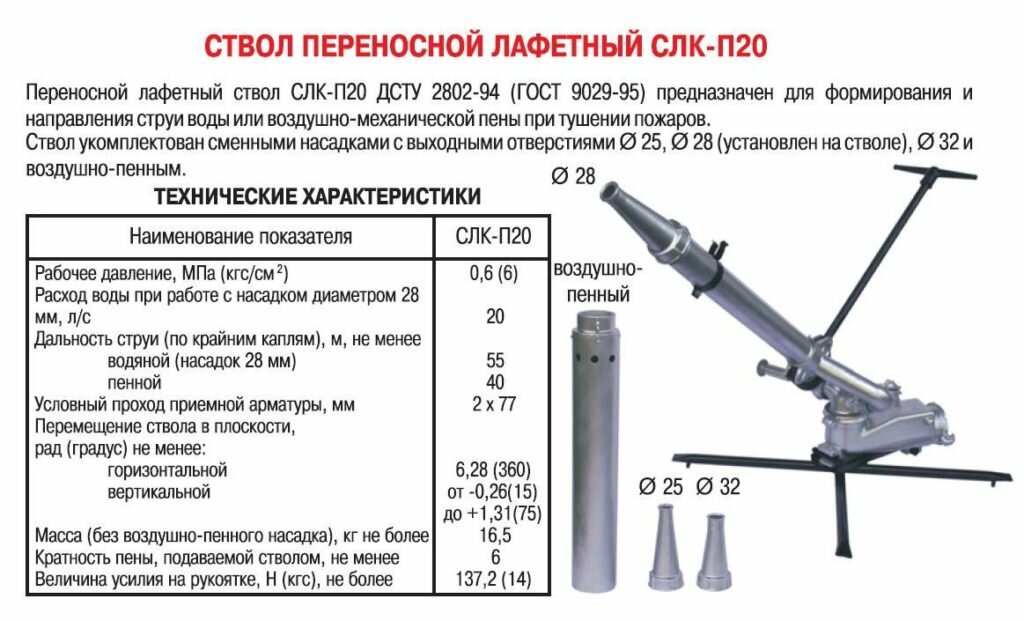
Design features of portable liners:
- Receiver case;
- pressure pipes;
- Housing for receiving (with half-nut);
- fixing element;
- control handle;
- Foundation (it is also a platform).
The advantages of such hoses include their mobility, low weight, ease of maintenance. The disadvantages are the increased time of filing and deployment of the barrel, the need for careful selection of the site for placement, with strong pressure, the entire structure becomes unstable.
Nevertheless, despite a number of shortcomings, most firefighters consider this type of fire monitor to be preferable.
Stationary with remote control
All that distinguishes them from the "big brothers" is the ability to control the hose from a distance.Such fire-technical weapons are high-tech and are used at objects of strategic importance (for example, oil refineries). They also showed themselves well when working from sea fire ships when extinguishing oil fires on the high seas on tankers or oil rigs. Such equipment is used only when there is a real threat to the life of firefighters.
The whole design is not very different from stationary models, the difference is only in the equipment of the remote control unit and the mechanism that sets the unit in motion. The control process itself is simple: the operator can change the type of jet, the angle of inclination, the volume of the flow of RH, the direction of the fire extinguishing agent supply. Management is carried out either by radio or by wire. Thus, the fire hazards do not affect the operator.
robotic
Simply put, the device is a robot on a movable chassis, equipped with a barrel and a reservoir for storing OM. It is used on fires of increased complexity, in which direct participation in the liquidation of a person will be associated with a real threat to the life and health of the latter.
Fire nozzles and their performance characteristics
The characteristics of each particular liner are described in its instruction manual. Accordingly, before purchasing this product, you should read this document in detail. It is important to choose a model that would correspond to the tasks of future operation, and not focus only on cost. The following are the main technical parameters requiring special attention:
- The maximum possible pressure for which the liner is designed - this indicator is indicated either in kg / cm2 or atmospheres.
- The maximum allowable volume of RH that can be issued per unit of time, provided that the operating pressure is maintained - this parameter shows the absorption of water by the device and it must be equal to the production capacity of the pump.
- Throw range - this characteristic is calculated at standard head and nominal angle.
IMPORTANT! When making a choice, you must immediately decide on the type of head that will communicate with the sleeve. It should suit him in all connection parameters.
Rules for using the trunk
In order for the fire specialist to maintain strength for a long time while operating the liner, while acting directionally and productively, it is necessary to take the most ergonomic position of the body, so there are several positions of working postures:
- "STANDING" - the leg on which the supporting forces fall is in front, therefore both the weight of the body and the weight of the equipment are evenly distributed. With one hand, you need to hold the tool, putting your palm on the bottom and holding your finger on top. The second leg must support the device in the connecting part.
- "FROM THE KNEE" - the operator kneels on one knee, the second leg moves forward a little. With one hand, the barrel is held at the side, with the second hand, its nozzle is supported.
- "LYING" - the operator lies on his back, leaning on his elbows. The liner is held in the normal position.
- "FROM THE LADDER" - the operator attaches the device to the carabiner along with the sleeve. Hands act according to the STANDING position.
IMPORTANT! The redirection of the jet in the selected direction is done by turning the human body, the nozzle is also turned there, while the position of other parts of the body should not change.If work is done with overlapping hoses, then the valve is opened with the hand that holds the nozzle. And the main line itself must be supported by a grenade launcher.
Technical regulations of barrels as fire-technical weapons
Its main provisions are:
- The shape of the jet is created by means of a hole in the nozzle;
- RH is supplied in equal volume over the entire area;
- Changing the shape of the jet (from standard to drip) is made without unnecessary transitions - with the help of a single manipulation;
- The consumption of RH is carried out without interruptions in its supply to the place of extinguishing;
- Under conditions of standard pressure, the tool retains its performance characteristics, while the tightness of all elements is not violated;
- Fire monitors must be fixed at certain angles in a vertical position;
- By means of an electric/hydraulic drive, remote control of the change in the direction of the hose is provided.
The technical parameters of foam generators are somewhat different from their barrel "brothers" in terms of principles of operation, device and purpose:
- The foam created by the machine must have an expansion ratio above average.
- The foam solution created by foam mixers must be of the required concentration.
- The work must guarantee the conditions of reliability and tightness.
Differences and features of air-foam barrels from foam generators
Both mentioned modifications of fire-technical equipment are used to create foam. Barrels are capable of forming low expansion foam, and foam generators produce higher than average expansion.
- "SVP" and "SVPE" - these models are able to work with various capacities.Their design consists of a body, which is subdivided into 3 chambers, in one there is a discharged space, then there is a connecting head, a nipple and a casing. The extinguishing agent flows through the chambers, in the rarefied space, foam masses are formed from it and air. From the device, they enter the sleeve, and then they are thrown onto the fire.
- "GPS" - these models consist of a body, belt, head and cassette. A 6% composition is sent to the distribution element, where it is crushed into individual drops. On the way to the grids, air is mixed into the substance, and the foam itself is directly created already on the cassette. The fire extinguishing mass leaves the generator by increasing its own volume. In order to prevent the stack from overflowing, the mesh must be constantly cleaned from damage and corrosion.
Safety and maintenance rules for working with barrels using foam agents
Operators who have successfully completed specialized training courses are allowed to control this type of fire-technical equipment. They are required to fully know the rules of operation, the maintenance procedure and the technical regulations of this fire hose. In addition, operators must regularly undergo appropriate training. The equipment itself must undergo systematic maintenance and is in a state of permanent readiness. The inspection should include the following:
- Visual check of all parts of the fire extinguishing equipment, especially for working elements: movable handles and parts, screens and nozzles, etc.;
- Check for the absence of dirt in the holes through which the RH is supplied;
- No damage to the grids;
- Checking the reliability of fasteners, if any are found, they are subject to immediate adjustment;
- Testing the movements of moving elements in all areas, in case of problems, they must be eliminated with a special lubricant;
- In the course of manipulations with the barrel, special attention should be paid to the pressure readings on the corresponding measuring device;
- At the end of the use of the equipment, it is mandatory to remove from the barrel all existing dirt and remnants of the fire extinguishing agent;
- It is necessary to completely remove all liquid from the tanks of the unit, this is especially true for the cold season;
- Wipe dry all parts of the device after the next use.
Rating of the best hand and monitor fire nozzles for 2025
Manual options
3rd place: RSKZ-70
A handy model that copes well with medium and small fires. The design itself is characterized by excellent ergonomics, it does not require particularly complex manipulations during operation. The body has an aluminum base. A feature can be called the fact that in addition to the usual jet, the device is able to create a fire-retardant curtain.
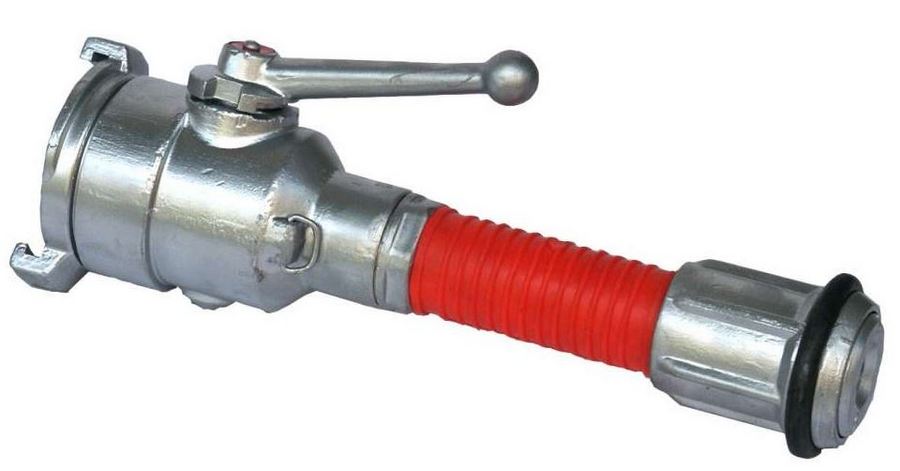
| Name | Index |
|---|---|
| Producing country | Russia |
| Working pressure, MPa. | 0.6 |
| Weight, kg. | 1.98 |
| price, rub. | 1500 |
Advantages:
- Creation of a veil;
- Quality;
- Easy to manage.
Flaws:
- The aluminum body is not durable.
2nd place: SVPE-2
The main distinguishing feature of this product is that it is used to produce air-mechanical foam formed from a special solution.The product is a mobile sample and is intended for use in open spaces or for additional equipment of fire equipment.

| Name | Index |
|---|---|
| Producing country | Russia |
| Working pressure, MPa. | 0.6 |
| Weight, kg. | 2.3 |
| price, rub. | 2500 |
Advantages:
- Rugged housing;
- High efficiency;
- Extended mobility.
Flaws:
- Special skills required for the job.
1st place: SRP-50E
The sample is distinguished by its versatility, the kit comes with a sufficient number of nozzles, the body is equipped with two handles for easy holding. It can be used in any type of enterprise - from large factories to small businesses. It can also be included in the armament of fire tank trucks.
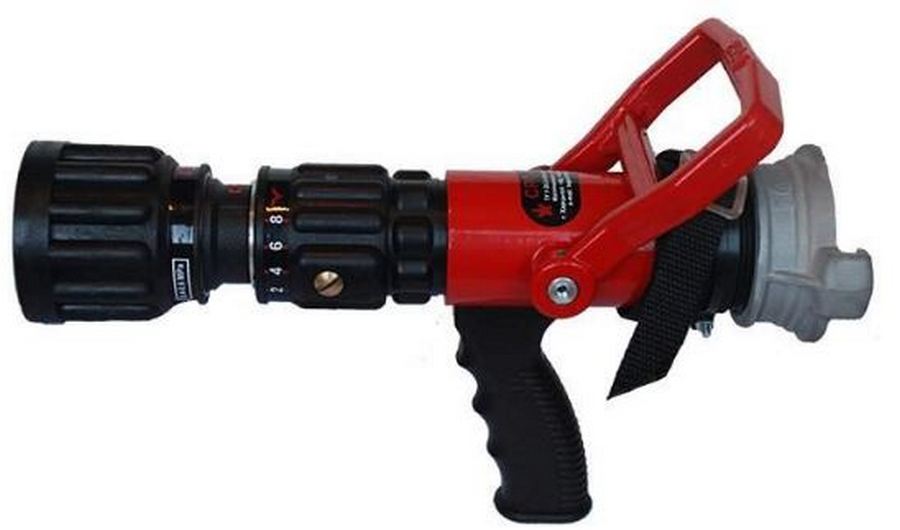
| Name | Index |
|---|---|
| Producing country | Russia |
| Working pressure, MPa. | 0.6 |
| Weight, kg. | 1.9 |
| price, rub. | 3500 |
Advantages:
- Versatility;
- Improved equipment;
- Easy to handle (2 handles).
Flaws:
- Not found (for their segment).
Carriage options
3rd place: SPK-S20
Able to form a continuous or sprayed jet of either water or air-mechanical foam. Unpretentious to the climatic conditions of use (from the tropics to cold climates). Easy to operate and easy to install.
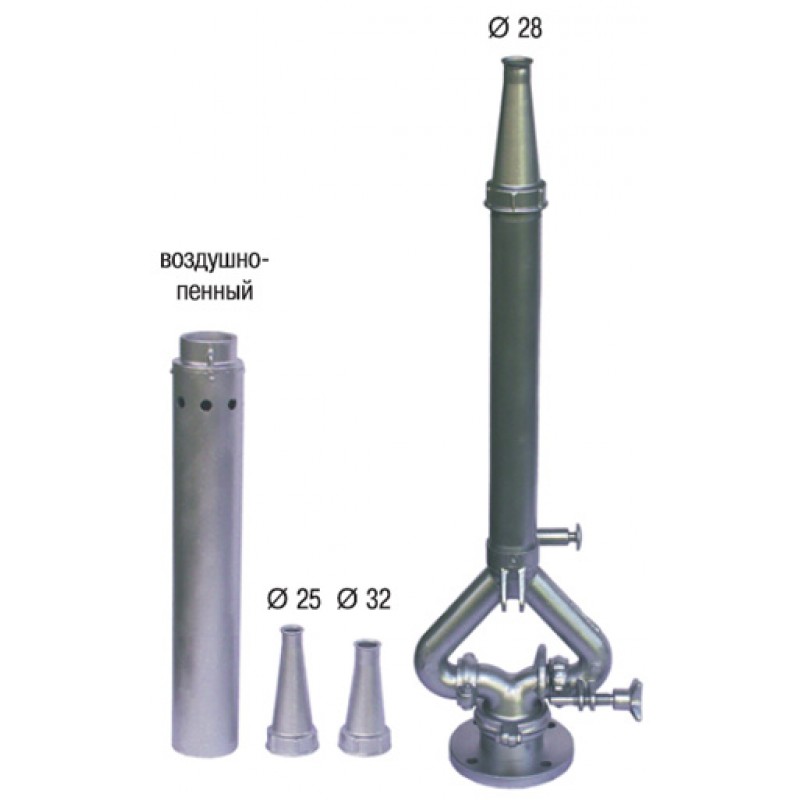
| Name | Index |
|---|---|
| Producing country | Ukraine |
| Working pressure, MPa. | 0.6 |
| Weight, kg. | 14 |
| price, rub. | 10900 |
Advantages:
- Possibility of variation of RH;
- Creation of a fireproof curtain at an angle;
- Ease of controls.
Flaws:
- Low working pressure.
2nd place: LS-S10U
Although this unit operates exclusively under manual control, it has a variable jet angle and can also spray low expansion foam.It can be used not only to put out fires, but also to cool extremely hot structures. In addition, it is capable of depositing clouds of poisonous gases, dust and vapors.
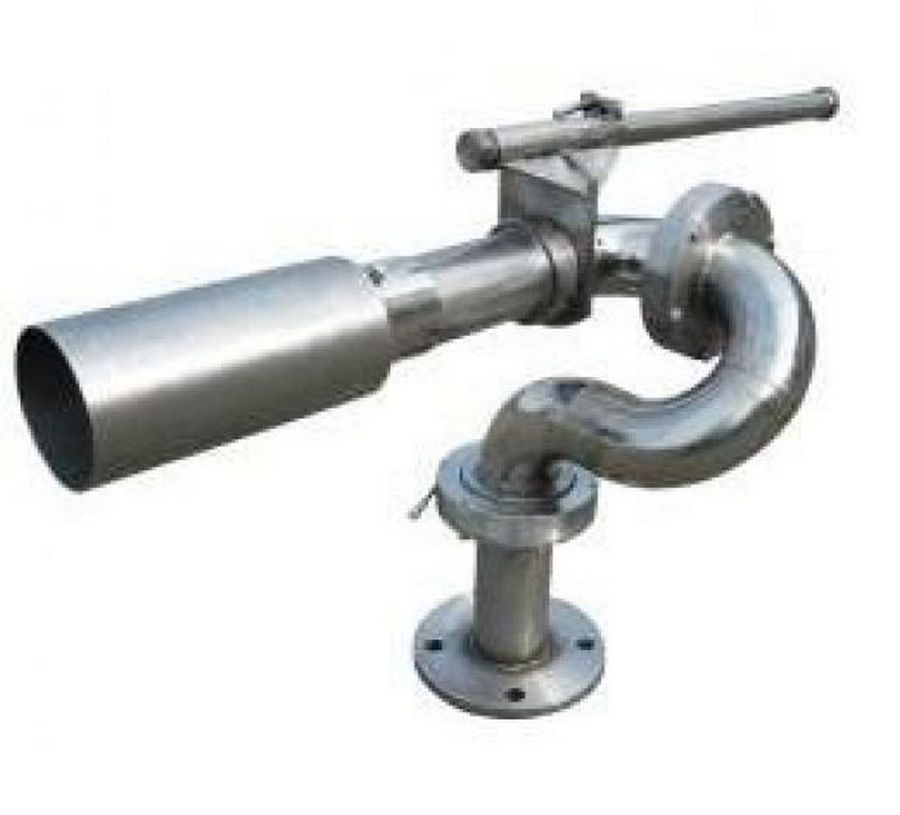
| Name | Index |
|---|---|
| Producing country | Russia |
| Working pressure, MPa. | 0.8 |
| Weight, kg. | 17 |
| price, rub. | 37000 |
Advantages:
- Multifunctionality;
- Reinforced hull;
- Variable jet angle.
Flaws:
- Only manual control.
1st place: LS-S100U
A completely universal unit, despite its stationarity and manual control, is able to work with the maximum amount of extinguishing agent flow. It is intended for installation on objects of strategic importance. At the same time, it also has a civilian application - it can be installed and used as a fountain.
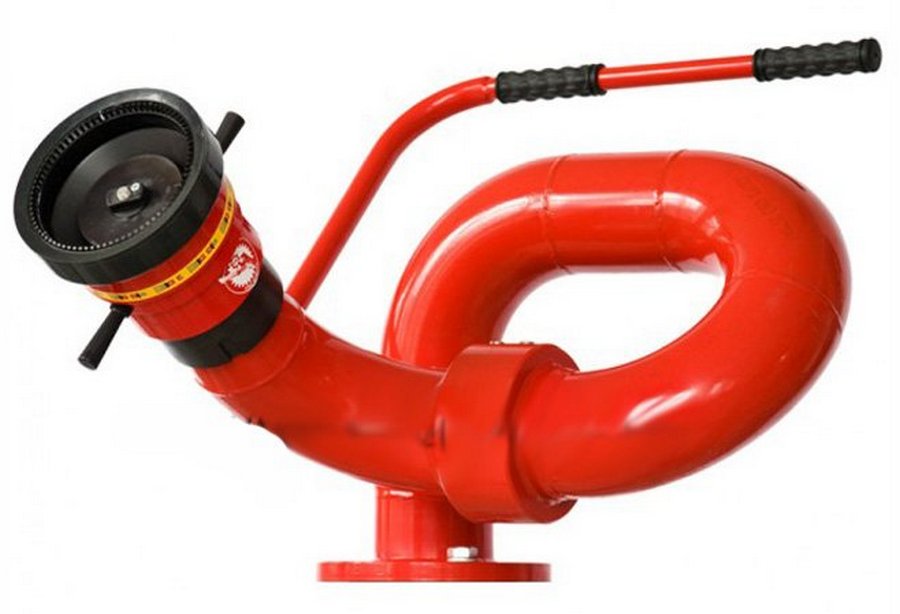
| Name | Index |
|---|---|
| Producing country | Russia |
| Jet length, m | 100 |
| Weight, kg. | 80 |
| price, rub. | 150000 |
Advantages:
- Increased power;
- Work with large volumes of water;
- Versatility.
Flaws:
- High price.
Instead of an epilogue
The analysis of the Russian market found that the consumer prefers fire-technical weapons of domestic production. Yes, this is not surprising, because the history of the development of fire equipment in Russia has more than 100 years and our models are in no way inferior to Western ones, and in some cases even surpass them. And in terms of service policy, the situation is even better - buying fire extinguishers from a Russian manufacturer does not require its subsequent certification in the bodies of the State Fire Supervision, which cannot be said about Western models.
new entries
Categories
The best men's sneakers in 2025
Views: 124031

The Best Complex Vitamins in 2025
Views: 121938
Ranking of the best brands of welding wire in 2025
Views: 14141



Useful
Ranking of the best vacuum sealers for 2025
Views: 1935
Rating of the best electric hobs for 2025
Views: 2340

Best Antivirals in 2025
Views: 33333
Top 15 hoverboards of 2025. Decent value for money
Views: 29338
Popular Articles
-

Top ranking of the best and cheapest scooters up to 50cc in 2025
Views: 131649 -

Rating of the best soundproofing materials for an apartment in 2025
Views: 127688 -

Rating of cheap analogues of expensive medicines for flu and colds for 2025
Views: 124517 -
The best men's sneakers in 2025
Views: 124031 -
The Best Complex Vitamins in 2025
Views: 121938 -

Top ranking of the best smartwatches 2025 - price-quality ratio
Views: 114978 -

The best paint for gray hair - top rating 2025
Views: 113393 -

Ranking of the best wood paints for interior work in 2025
Views: 110318 -
Rating of the best spinning reels in 2025
Views: 105327 -

Ranking of the best sex dolls for men for 2025
Views: 104363 -
Ranking of the best action cameras from China in 2025
Views: 102214 -
The most effective calcium preparations for adults and children in 2025
Views: 102010