
Rating of the best Russian manufacturers of aerated concrete blocks for 2025
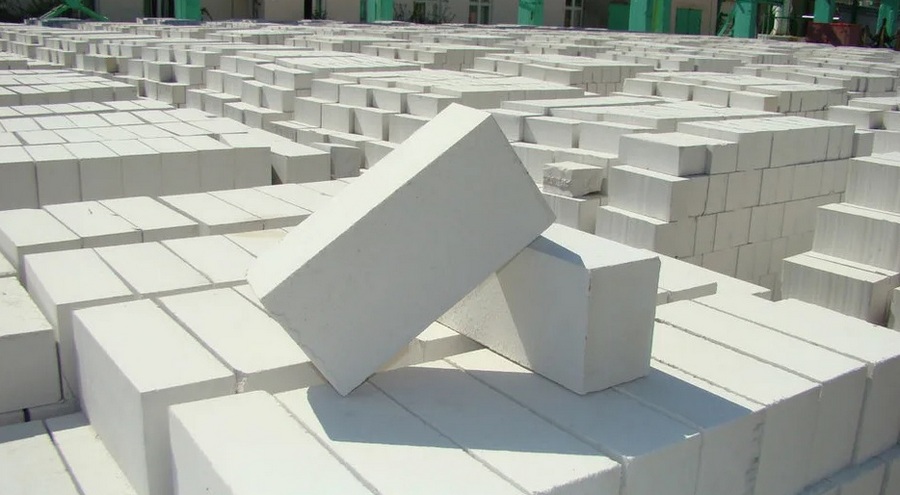
Aerated concrete blocks have long become a fairly popular material that allows you to quickly, efficiently and at no extra cost to build small buildings. Among other things, this building material can be easily processed, and it is very simple to repair structures from it.
Content
- 1 Aerated concrete blocks: general information
- 2 Foam concrete and aerated concrete - the main differences
- 3 Advantages and disadvantages of aerated concrete construction
- 4 Types of aerated concrete blocks
- 5 Difficulties of choice
- 6 Rating of the best Russian manufacturers of aerated concrete blocks for 2025
- 7 Conclusion
Aerated concrete blocks: general information
They are a mixture of sand, lime and cement and, in fact, are one of the modifications of cellular concrete. Material of artificial nature with the presence of porous inclusions, which are 85% filled with gas or air. It is due to these characteristics that the blocks are light in weight and have a low degree of thermal conductivity.
During their production, gas is formed as a result of the chemical reaction of the gas-forming agent, which is aluminum powder or a paste consisting of a binder, sand and water. Also, pores in aerated concrete building modules are formed when foam is mixed with a special foam solution that has a foaming agent in its structure. The type of material under consideration is divided into varieties that are formed when using a different binder. Products can be made on the basis of Portland cement, slag concrete, a mixture of lime and cement, gas-slag concrete and foam-slag concrete. At the same time, it is possible to use gas silicate or foam silicate as the basis.
According to the final purpose of the application, the modules can be intended for thermal insulation or be purely structural (a thermal insulation and structural option is also possible). Their production itself can be carried out according to the autoclave and non-autoclave method. The latter method involves manual production, i.e. in the production part, process automation is not used at all, and everything is done exclusively by hand - the mixture is kneaded with shovels or a special mechanism driven by human muscle power. It is worth using products made by this method only if they are produced independently, but in extreme cases - at your own peril and risk.
Specifications
Aerated concrete is an artificial stone with a porous cement structure. The composition includes quicklime diluted with aluminum paste with sand, cement and water. This is how a building module is obtained, in which the internal pores are evenly filled with air. It is thanks to these pores that aerated concrete has a light weight, excellent thermal insulation and is very easy to process. Calcium silicates created during the production process are absolutely harmless to humans. There is no crushed stone in the structure, the proportion of cement is from 50 to 60%, and a homogeneous device is given to the material with a mediocre foamed lime.
The material itself was invented in Sweden at the end of the 19th century, and it was supposed to be used exclusively for the construction of complex and multilayer walls, in order to reduce their heat transfer.
Later, in the course of improving the technology, the possibility of building low-rise prefabricated structures from such products (both residential and industrial) was established.
Foam concrete and aerated concrete - the main differences
In modern construction of prefabricated structures, porous blocks are often used, where foam concrete, aerated concrete and aerated concrete are the leaders. They differ from each other in the way they are produced. Aerated concretes, in most cases, use the autoclave manufacturing procedure, are characterized by high strength and density, and have uniform thermal conductivity. It is the autoclave method that gives them rigidity and strength. He is also responsible for the fact that aerated concrete, unlike other models, shrinks by only 0.3 millimeters against 2-3 millimeters for other types. Factory aerated concrete is devoid of a pronounced smell of lime and does not have increased properties of corrosive activity. More specifically, aerated concrete differs from foam concrete in the following properties:
- It is cut from monolithic modules and has clear geometric shapes, and thanks to the exact dimensions, it is possible to simplify laying work and optimize the consumption of plaster;
- Aerated concrete fits perfectly on a special adhesive mixture, which reduces the formation of "cold bridges";
- Small aerated concrete pores “grab” the plaster easier and faster;
- Aerated concrete products are of an industrial nature, which excludes underweights/overweights for each individual module. Foam concrete can be made in a handicraft way, which is why products made from it are deprived of precise shapes and weight.
Advantages and disadvantages of aerated concrete construction
Initially, the type of building material in question was to be used for laying concrete frames in industrial buildings and was not at all intended for use in civil engineering.When erecting residential buildings for these blocks, it is necessary to take into account their positive qualities:
- They are much lighter than brick and concrete, respectively, there is no need for a massive foundation;
- Have a high degree of fire safety;
- Completely environmentally friendly and do not harm human health;
- They are not subject to decay and cannot be damaged by pests, which means that there is no need for treatment with special chemical compounds.
Some of the "cons" of this material include:
- May shrink as much as 0.5 millimeters per meter in the first month after installation, which may be caused by high humidity conditions. If you maintain the required level, then shrinkage immediately stops. This situation can also be influenced by the geographic region of construction, the thickness and density of block modules, and the time of year in which the masonry was carried out.
- Due to its porous structure, aerated concrete perfectly absorbs moisture, so it will need additional protection both from the outside and from the inside. During construction, the unfinished structure is required to be covered during the shutdown with a waterproofing coating that is protected from snow and rain.
- Finished walls are subject to mandatory cladding. The best result will be a combination with ceramic blocks or standard bricks, but the cladding should not take place immediately after the walls are erected - they must dry properly so that moisture leaves the structure.
- The white-gray surface does not look very aesthetically pleasing, so it would be a smart decision to finish it with facade coatings.
- It is preferable to build a structure from freshly made modules, and not from those that have been stored for a long time.When idle, the density of aerated concrete will decrease.
Types of aerated concrete blocks
The marking of this type of building components looks like the Latin letter "D" with a numerical value that indicates the density of the material. For example, D-500 speaks of a block density of 500 kilograms per square meter. Depending on the density, there are three types of block products:
- Thermal insulation;
- Structural and heat-insulating;
- Structural.
When marking the described products, their purpose must be clearly indicated, no substitution of characteristics is allowed. Unscrupulous labeling will increase the risk of using the building material for other purposes, which clearly threatens to worsen the technical parameters of the building under construction and easily lead to the collapse of the entire structure.
Thermal insulation
These modules include the marking D 300-400. With such a low density, the material gives off heat weakly, but its smaller number of pores indicates low strength. It is customary to build load-bearing walls from such products, the operation of which will not be designed for excessive load (with the exception of its own weight). An excellent example here would be buildings with a spatial framework based on reinforced concrete columns or panels. It is enough to fill the areas of the outer walls with products, leaving door and window openings in them. For each storey wall, support must be made on the ceiling, and the maximum height should not exceed one storey. Such a construction is not capable of subjecting the block structure to a heavy load.
Structural and heat-insulating
This type of product is marked D 500-900 and is considered universal. The blocks are able to withstand significant loads, however, have low thermal conductivity.These modules can be used for the construction of two or three-story structures, even if their internal partitions and ceilings are made of reinforced concrete. For regions with a temperate climate, insulation is not required. It is preferable to use this block product for the construction of private small houses.
Structural
For these blocks, the density is equal to or greater than 1000 kilograms per square meter, i.e. marking starts from D1000. Such aerated concrete can be used to construct the walls of buildings with several floors. Due to the increased density of the material, any laying element from it (especially during construction in areas with a cold climate) needs additional insulation. Also, such modules can be reinforced and used as lintels, slabs and beams for prefabricated floors. Nevertheless, despite the high density, this type is not allowed to be used as a foundation. Even with increased density indicators, the material will absorb a sufficient amount of excess moisture, which will certainly lead to its subsequent destruction. Based on the same reason, D1000 needs to make a horizontal waterproofing between the walls and the foundation.
Difficulties of choice
Before starting the construction process, it is necessary to decide what type of aerated concrete products should be used for partitions and walls. The modern Russian assortment of these products is so diverse that it will be very difficult to make the only right choice. It is always worth remembering that the use of modules with the correct geometry will save plaster and adhesive composition. The same property will reduce the cost of heating the future premises and its thermal insulation.In any case, first of all, you need to pay attention to the brand, frost resistance, overall density, size and shape.
purpose
Most often, partition and wall products with a U-shaped profile come across on the Russian market. The material for the outer walls should be thicker so that it is possible to lay all the modules in just one row. This type of construction will increase its pace, while reducing the risk of the formation of "cold bridges". For partitions, products with a small thickness are suitable, which will allow more efficient use of internal usable areas. However, such blocks should be subject to increased requirements in terms of soundproofing characteristics, which is important for partitions. Also, the U-profile will be an excellent solution for the design of door and window lintels. Their cutout can be adjusted to the required length of reinforcement, which will provide a greater degree of load-bearing capacity.
Manufacturing technology
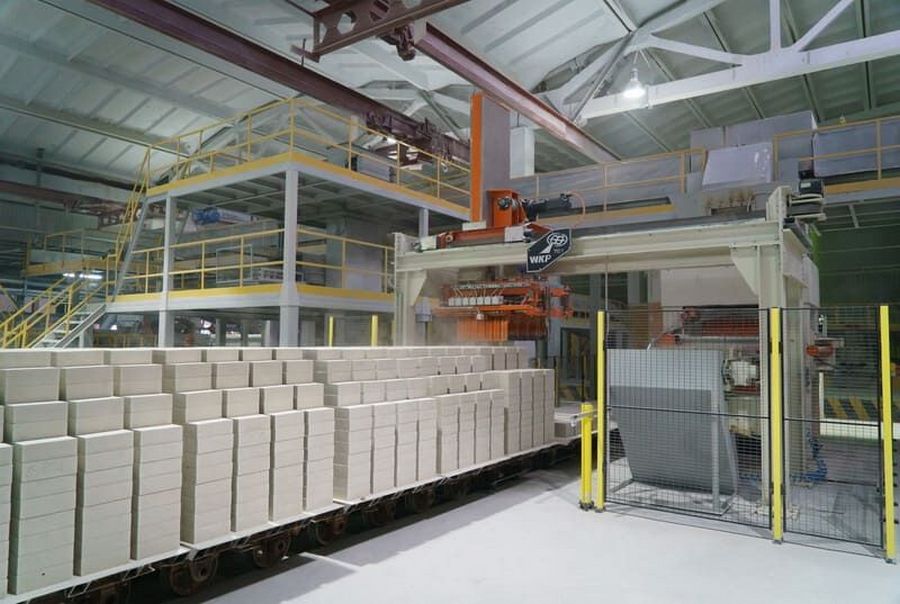
Autoclave production uses the same raw materials as non-autoclave production. The main difference between the products will be the heat treatment of the product. Some manufacturers in the Russian Federation prefer to carry out drying through a natural way, but this will necessarily affect the stability of density and dimensions, while at the same time negatively affecting the thermal parameters, which is not allowed by autoclave production. The latest technology is inherent in the implementation of high-pressure steam heat treatment - this increases the density of the building material, ensures normal geometry and the correct dimensions.Still, autoclave automatic production using high technologies is typical for Russia, which indicates a sufficient level of quality.
Marking
On this subject, it is always worth keeping in mind that the grade will depend on the density. The higher the brand, the stronger and heavier the block will be. A marking of 500 units means the possibility of building load-bearing or external walls, 600-700 units - suitable for the construction of load-bearing structures in houses with a number of storeys of 3 or more floors. 300 units is the best choice for internal wall partitions, and the 200 unit option can only be considered as additional insulation.
Shapes and dimensions
Russian manufacturers have already launched the production of dozens of standard sizes of aerated concrete blocks. Their selection will depend on the region of construction and its climate. The thickness is selected on the basis of thermal engineering features, and the length and height - depending on their need for each specific design. For external walls, the largest possible products are purchased, which allows you to speed up the workflow by using fewer blocks, while simultaneously reducing the consumption of adhesive. The Russians prefer a more rectangular shape with a tongue-and-groove lock. Of products with a rectangular shape, it is easiest to build partitions, and the "comb-groove" system will make the inter-unit connection more durable.
Thickness and Density
Such parameters are those basic characteristics that significantly affect the energy efficiency of building materials. Aerated concrete with a lower density will have a minimum coefficient of thermal conductivity, respectively, the thickness of the wall created on the basis of such blocks will have to be artificially increased.The reverse side of the medal is low strength, which will affect the reliability and strength of the entire structure. Professionals advise entrusting such calculations to a highly qualified heat engineer.
Frost resistance
In the production of construction work in areas with very cold winters, an important indicator of the block material will be its resistance to low temperatures. It also has its own marking and is indicated by the letter "F". Specifically, for the middle zone of the Russian Federation, an indicator of 50 to 100 units is recommended, for more southern regions it will be 15-25 units. But most often, products with an indicator of 25-50 units are used, and if necessary, they are simply heavily insulated additionally.
Rating of the best Russian manufacturers of aerated concrete blocks for 2025
Regional companies
4th place: "EKO LLC, Yaroslavl"
This plant of building materials was founded in 2003. Over the long period of operation, the company has managed to win the trust of thousands of retail customers. Products compete even with foreign brands. The company offers customers: reinforced concrete piles, aerated concrete, concrete blocks, hollow floor slabs, ready-mixed concrete. The German production line produces materials in large quantities so that each customer receives the required volume of products for their needs. The main strategic goal is the introduction of new materials and technologies to the market.
Advantages:
- German production line;
- Long work experience;
- Production of large batches of products.
Flaws:
- Not detected.
3rd place: Girey ZAO Zhelezobeton, Kropotkin
The company was founded in 1954. The Girey production site initially had a capacity of 6 thousand m³ of products per year.Today, the design capacity is 68.1 thousand m³ per year of prefabricated reinforced concrete and aerated concrete products. Every tenth cubic meter of precast concrete and concrete products in 2014 in the Krasnodar Territory was produced at this enterprise. The product range includes reinforced concrete slabs, piles, road slabs, fencing slabs. It is possible to provide services for a specific order, the staff is made up of highly qualified specialists, the products have competitive prices. The company has several awards and diplomas of regional exhibitions in the field of introducing the latest technologies.
Advantages:
- Wide range of products;
- Availability of awards and diplomas;
- High design capacity.
Flaws:
- Orientation to the market only in the Krasnodar Territory.
2nd place: FGC EuroDOM, Ozersk
This aerated concrete block factory specializes in designing and manufacturing DIY kits, mini timber house kits. All products are distinguished by extremely affordable prices. A separate area of activity is the construction of foundations. We have our own production of screw piles with a cast tip. It is proposed to build: a foundation on concrete piles, a strip foundation, a column foundation. The company is a regional distributor of well-known European manufacturers of building materials, such as: "Prana", "Winzel", "Marley", "Vakio". Engaged in all types of construction work, from full-fledged construction to the erection of fences, the implementation of facade and roofing works.
Advantages:
- Availability of own products and sale of foreign samples;
- Wide range of services;
- Orientation to objects of self-construction.
Flaws:
- Not detected.
1st place: "LLC "Center for High Technologies", Krasnodar"
It has been operating in the market of the Southern Federal District since 2016 and operates under the brand name “Plant “Polystyrene concrete”. The product is certified within the framework of compliance with the requirements of GOST. Produces advanced aerated concrete material in the field of construction. In all its characteristics, it is many times superior to all known materials (brick, expanded clay block, wood). Its main advantage is obtaining a modern structure that satisfies the concept of "energy efficient and economical construction". Building blocks are used for the construction of partitions, load-bearing, self-supporting walls and for insulation. Advantages: savings on construction - the cost of 1 m2 of the building - from 8 tr. up to 12 tr. Construction time - due to light weight, construction time is reduced by 4 times (compared to brick). Comfort - the house will be 2 times warmer than a house made of wood or concrete (with equal wall thicknesses). The walls of the house do not need to be insulated (wall thickness 30 cm). High strength characteristics - the possibility of frameless construction up to 3 floors. Vapor permeability - the walls of the house "breathe" like a tree.

Advantages:
- Economic prices;
- Excellent product specifications;
- The possibility of building multi-storey buildings.
Flaws:
- Not detected.
Federal level companies
4th place: "Egorevsky plant of building materials, Moscow"
In the second quarter of 2012, the plant began production of aerated concrete blocks.The company has installed the latest production line of the German company Masa Henke, one of the leaders in the production of goods for the construction industry. The production capacity of the line is 500 thousand m3 of products per year. The daily output of products is 1440 m3/day. Products include: standard blocks with flat faces, tongue-and-groove blocks, blocks with grips, partitions. All types of products can have D400, D500 and D600 density specifications. The assortment line of aerated concrete products has an ideal geometry and excellent physical and mechanical characteristics. All products meet the requirements of GOST, SNIP and other regulatory documentation for structural and thermal insulation materials. The presence of a modern laboratory allows for constant quality control at all stages of production, from the analysis of raw materials to finished products.

Advantages:
- Availability of own laboratory;
- Compliance with Russian standards;
- German production line.
Flaws:
- Not detected.
3rd place: "Khabarovsk Aerated Concrete Plant LLC, Khabarovsk"
This domestic manufacturer is located in Khabarovsk and specializes exclusively in the production of aerated concrete blocks. The sale of goods occurs only in bulk at the manufacturer's price list. A network of distributors has been established in Central Russia and the Far East. Affordable prices without any "cheat".
Advantages:
- Sufficiently wide network of distributors of goods;
- Democratic prices;
- High-quality release technology.
Flaws:
- Very narrow specialization.
2nd place: "Company" GAZOBETON ONLINE "St. Petersburg"
This company is focused on the production and sale of aerated concrete products and related products. Careful delivery of aerated concrete blocks, aerated concrete lintels, U-blocks, as well as adhesives and tools for working with autoclaved aerated concrete. Orientation to help in the independent construction of low-rise buildings throughout Russia. It is characterized by the best prices for aerated concrete in St. Petersburg, the supply of raw materials occurs directly from miners or manufacturers. It has the widest range of aerated concrete products from wall blocks to reinforced lintels, including aerated concrete adhesive and installation tools.

Advantages:
- Excellent value for money and quality;
- Availability of production of related products;
- Direct deliveries from the manufacturer to the buyer.
Flaws:
- Not detected.
1st place: LLC Gazobeton, Novosibirsk
The main activity of the company is the production of aerated concrete. Aerated concrete products have high competitive properties, and due to the technological features of the production line, they surpass the products of other companies in some parameters, only highly environmentally friendly ingredients are used in production. The company has all the necessary certificates for products, and also regularly conducts new tests in order to improve the quality. This gives additional quality guarantees, and also removes a significant number of possible problems with designers, which means a significant reduction in the cost of the project as a whole. Products are produced in several sizes, differ in different thicknesses, which makes it easy to choose the right size.Lighter blocks make it easier and faster to erect a building. The absence of grooves eliminates the need to spend glue and waste time filling them in the masonry.

Advantages:
- High-tech production;
- Adequate price tag;
- A clear acceleration of the construction process.
Flaws:
- Not detected.
Conclusion
The construction of houses from aerated concrete in Russia is increasingly conquering the market for domestic suburban construction. A lot depends on the right choice of building material. After all, the dwelling must withstand not a year or two, but several decades, and appropriate funds are invested in it. Therefore, so that after the purchase of building materials it would not be excruciatingly painful for the time and money spent, one should properly understand at least the parameters and properties of aerated concrete.
new entries
Categories
The best men's sneakers in 2025
Views: 124038

The Best Complex Vitamins in 2025
Views: 121942

Rating of the best 75-inch TVs for 2025
Views: 1525
Rating of the lightest children's bikes for 2025
Views: 34334



Useful
Ranking of the best vacuum sealers for 2025
Views: 1939
Rating of the best electric hobs for 2025
Views: 2342

Best Antivirals in 2025
Views: 33335
Top 15 hoverboards of 2025. Decent value for money
Views: 29341
Popular Articles
-
Top ranking of the best and cheapest scooters up to 50cc in 2025
Views: 131654 -

Rating of the best soundproofing materials for an apartment in 2025
Views: 127694 -

Rating of cheap analogues of expensive medicines for flu and colds for 2025
Views: 124521 -
The best men's sneakers in 2025
Views: 124038 -
The Best Complex Vitamins in 2025
Views: 121942 -

Top ranking of the best smartwatches 2025 - price-quality ratio
Views: 114981 -

The best paint for gray hair - top rating 2025
Views: 113398 -
Ranking of the best wood paints for interior work in 2025
Views: 110321 -

Rating of the best spinning reels in 2025
Views: 105332 -

Ranking of the best sex dolls for men for 2025
Views: 104370 -

Ranking of the best action cameras from China in 2025
Views: 102219 -
The most effective calcium preparations for adults and children in 2025
Views: 102014