
Rating of the best waterproofing for 2025
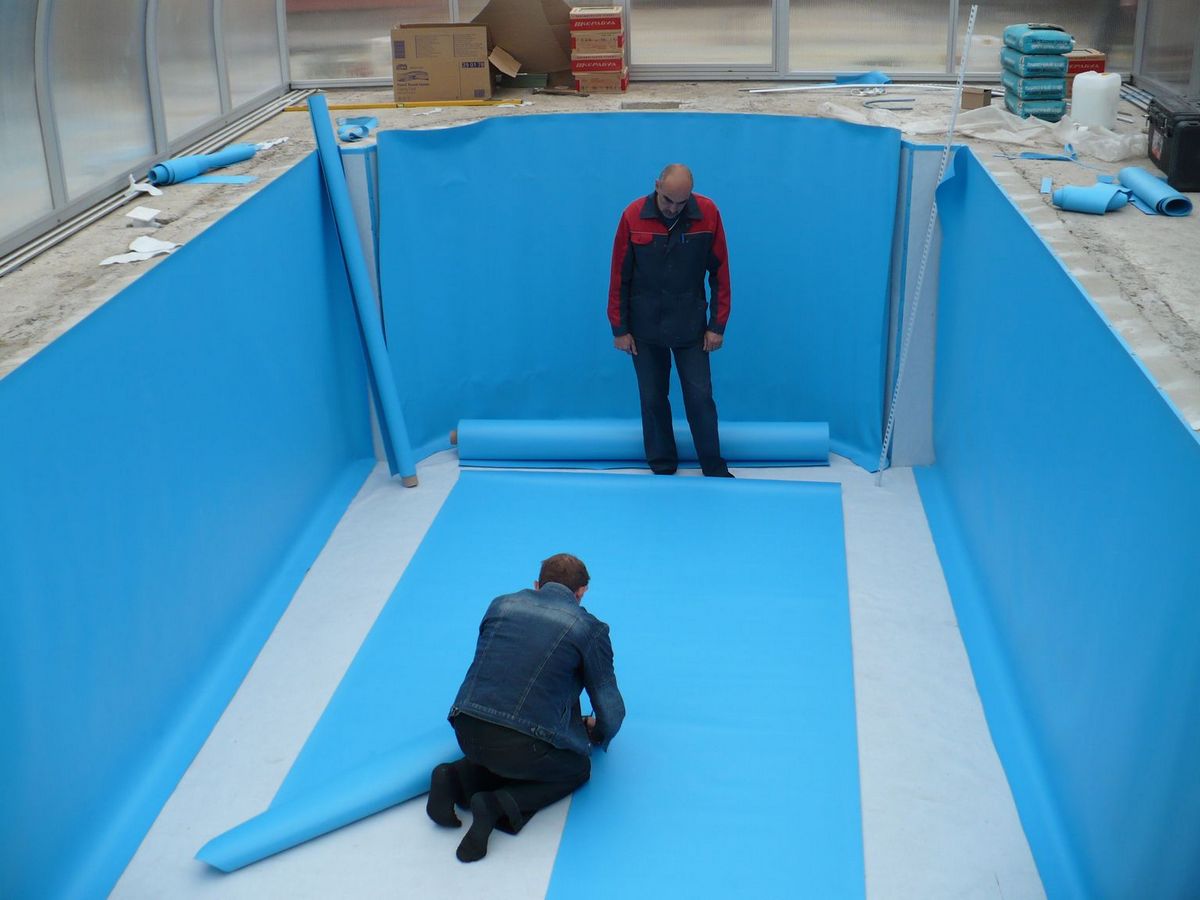
Competent waterproofing is absolutely necessary for every house and room, because moisture can come from almost any direction. Groundwater can cause damage to the foundation, raindrops can penetrate through the smallest cracks in the roof, layers of snow can accumulate on the roof for a long time, and then (when melting) penetrate the structure, deforming the roofing along the way. The builders of dams, basins and other hydraulic facilities are well aware of the detrimental effects of the interaction of building materials with moisture. However, they also know how to solve this problem. The methods and materials through which you can save your home from excessive moisture are extremely diverse.And then a natural question arises - which one is better?
Content
- 1 Varieties of materials and methods of waterproofing
- 2 Separate technical features of the choice of method and application of waterproofing
- 3 Foundation works
- 4 Works on wooden structures
- 5 Roof work
- 6 Works in pools and artificial reservoirs
- 7 Wall and floor protection work in bathrooms
- 8 Rating of the best waterproofing for 2025
- 9 Instead of an epilogue
Varieties of materials and methods of waterproofing
It is customary to call waterproofing materials a compacted layer with waterproof characteristics, which is applied to some elements of the structure. These materials themselves are often divided into special groups, depending on the way they are integrated. Standard waterproofing can be:
- Okleechnaya;
- painting;
- Coating;
- penetrating;
- injection;
- sprayed;
- Plaster.
Most common
Painting shop moisture insulation is the thinnest film that is formed when the base is painted with mastic, special paint or varnish, bitumen, etc.Naturally, in the composition of these mixtures there are special ingredients that are in a plastic / liquid form. Most often today, bituminous mastics are used, which contain fluffy lime, asbestos or talc. Also, paintwork materials based on plastics or synthetic resins are distinguished by their efficiency. As a rule, before applying these materials, they are slightly heated (here it is necessary to use the manufacturer's recommendations regarding the required heating temperature), but bituminous mastics should be heated very strongly - up to 170 degrees Celsius. This is because they will need to be applied in two or three layers and each must be at least 2 mm thick. But for synthetic compositions, one layer 1 mm thick is enough.
IMPORTANT! Bituminous mastics should not be used even when heated, if the ambient temperature is below +5 Celsius.
Okleechnoe waterproofing is the process of gluing special roll/sheet materials to the surface to be treated, which are fixed with hot/cold bituminous mastics. Also, resins based on synthetics can also be used as an adhesive base. For the implementation of this type of insulation, the following materials resistant to decay processes can be used:
- PVC and polyethylene films;
- Asphalt reinforced mats;
- Brizol, isol, hydroisol, foilizol and metalloizol;
- Glass fiber and glass roofing material.
It is easiest to use roll waterproofing on horizontal areas. However, rolls having a cardboard base (roofing felt, roofing felt or glassine) are not suitable for pasting. The canvas must be mounted with an overlap of 10 cm, and in such a way that the joints of adjacent elements do not overlap.
IMPORTANT! When processing horizontal surfaces, part of the material must be “brought” onto a vertical surface (wall) in order to increase the waterproofing effect of pasting. To do this, the wall must first be leveled, because if there is a difference of more than 2 mm, then it can lead to deformation and general damage to the insulation layer.
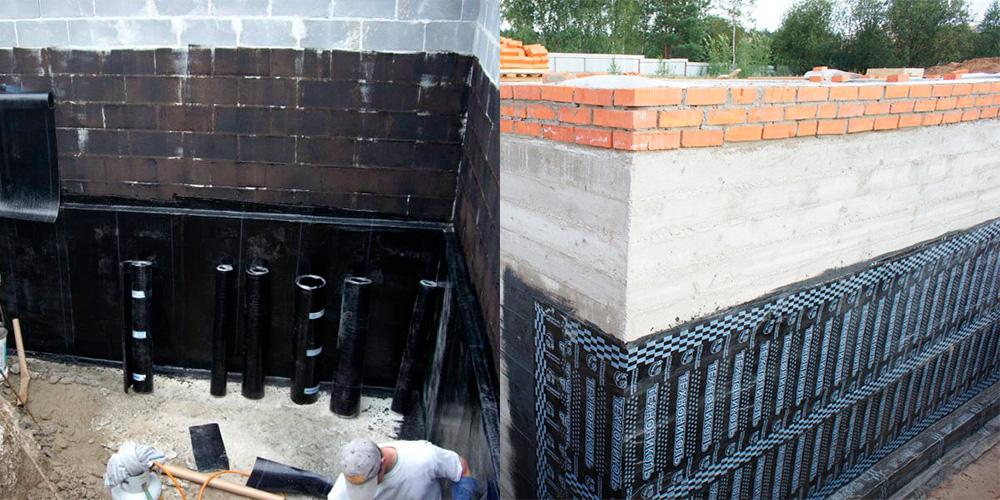
Coating waterproofing is used for concrete/cement/masonry substrates and consists of one- or two-component elastic mixtures, which are applied in several layers. This method is considered to be extremely effective in the arrangement of pools and basements, as well as in sealing leaks. It is worth noting that bitumens / mastics / sealants are very toxic and can only be used on a dry base. From this it is clear that the use of a two-component polyurethane composition will be preferable.
Plastering isolation means covering the surface in several layers (5 to 40 mm thick) with cement plaster with water repellents or mineral fillers - they are best suited for processing rooms with high humidity (artificial small ponds, swimming pools, bathrooms). For rooms in which humidity is present in a special excess, asphalt plaster based on cold / hot mastics can be used. In this case, they should be laid in two or three layers (with a thickness of 2-4 mm each), especially in places where there is a risk of hydraulic head breakthrough.
IMPORTANT! When plastering insulation of vertical surfaces, the treated areas should be additionally reinforced with bricks, reinforced mesh or concrete.And when insulating horizontal surfaces in a similar way, they are protected with a cement / concrete screed or poured asphalt mixtures (usually hot mortars or mastic), which are poured between the protective wall and the base base.
The most effective
Penetrating method is considered to be both the most popular and the most effective. It consists in the fact that the waterproofing layer fills all possible pores of the base, penetrating into the structure of the material to a depth of 20 cm. Thus, the layer simply displaces moisture and creates inextricable joints at a depth. The undoubted advantages of this method include:
- No need for priming the treated surface;
- The applied composition simultaneously repairs all existing cracks;
- On a concrete base, strength increases by at least 20%;
- Air exchange parameters are not violated;
- The surface becomes more resistant to low temperatures;
- There is no need to apply an additional protective layer.
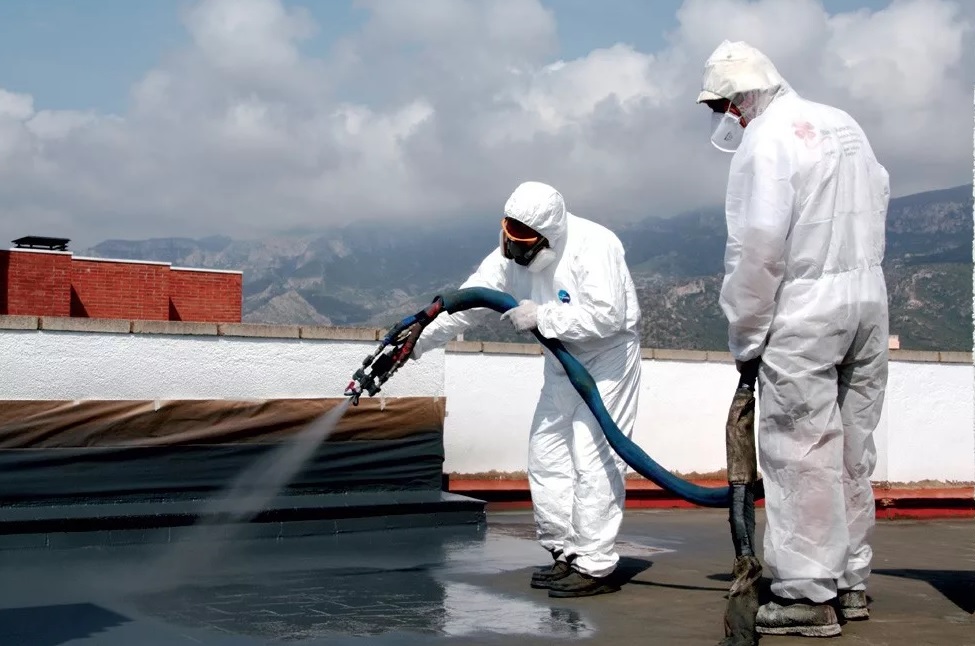
sprayed the waterproofing method consists in installing airless spraying using an airbrush. As a result, a membrane base will be created, which may consist of polyurethane / bitumen / acrylic sprayed materials of ultra-high strength. This method is considered the most versatile, because the materials used for its production very successfully resist not only moisture, but other more aggressive substances. In addition, the formed surface will have pronounced anti-slip and anti-corrosion properties that will last up to 50 years.
Injectable waterproofing method means the use of polyurethane / acrylate / silicate resins or cement and special emulsions.It is especially effective when it is necessary to process various adjunctions, expansion and cold joints, sealing hard-to-reach places. The degree of penetration of mixtures into the right places is very high - for example, acrylate gel penetrates into cracks no worse than water. However, this method is very expensive and requires the participation of a professional in the process. As a rule, it is already used along with the other methods described above as an additional operation to strengthen precisely those places where it is impossible to mount waterproofing otherwise.
Separate technical features of the choice of method and application of waterproofing
Before starting the waterproofing procedure, you need to decide on the type of base on which the composition will be applied. For example, it is better to cover concrete with a plastering method, for wood, a gluing method using roofing material would be preferable. You also need to pay close attention to the following points:
- Features of environmental conditions;
- Estimated service life;
- Are there any special requirements for the installation process;
- What is the level of assembly complexity;
- Is the future load large?
- All this will directly affect the choice of material and method of waterproofing.
It is worth noting that the waterproofing of parts of the foundation should be taken care of even at the construction stage. Mistakes that may be made at that time may require significant efforts in the form of unplanned repairs in the future. For example, vertical waterproofing of the foundation should be carried out by pasting. Professional builders advise for these purposes to select durable roll materials, such as ecoflex, isoelast, bicroplastic, isoplast - all of them are next-generation insulating materials.And, of course, experts advise entrusting the implementation of these works to professionals.
During the use of coating materials, bituminous mastics are most often used due to their not very high cost. However, the process of applying them is quite laborious. But a non-professional can already cope with bitumen-polymer mastic: it lays down easier, and its consumption per square meter is less.
IMPORTANT! When purchasing cement-based mastic, you should make sure that its moisture resistance value exceeds W10. This parameter is indicated on the packaging.
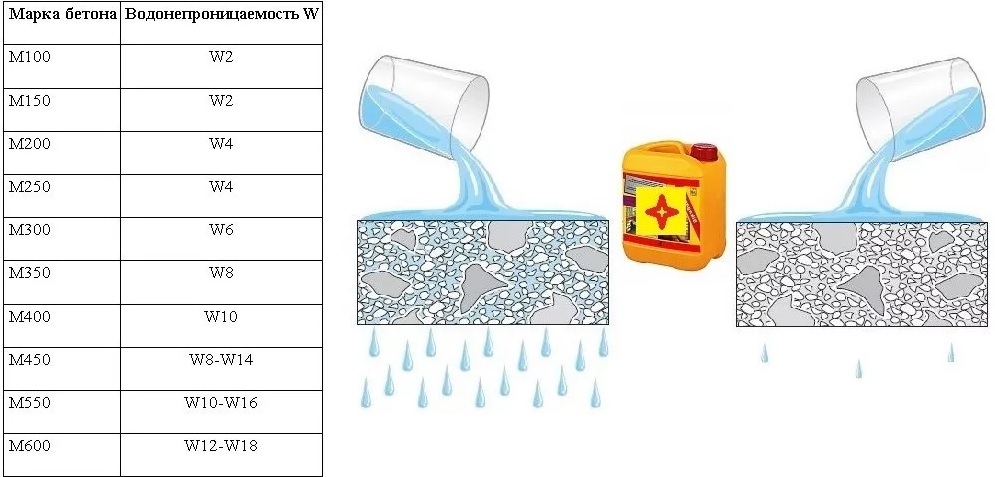
For work in small areas, professionals advise using penetrating waterproofing. For example, by simply applying it to concrete, the mixture will qualitatively penetrate into the base structure and form insoluble crystals there, which will protect the treated surface from water with maximum reliability. Indeed, this method is very effective and it is even desirable for them to carry out the entire processing of the foundation, however, not everyone can afford such a procedure due to the high cost of materials.
In turn, it is better to isolate the floor from moisture by means of paint coatings, because they are easy to use. However, depending on the conditions (for example, if the structure is located in a periodically flooded zone), filling, impregnating, plastering or pasting methods will be acceptable options. It must always be remembered that waterproofing work requires a continuous process.
Foundation works
Their complexity lies in the fact that the layer must not only protect the structure from water, but also prevent groundwater from entering the basement.The use of various waterproofing materials will depend on the depth of the foundation and the level of passage of ground flows. In very simple cases, it is possible to use a profiled membrane based on polymers, and for the interior treatment of the basement, use coating compositions. A profiled polymer-based membrane can also protect the base from tree roots, sharp fragments of construction debris, while simultaneously performing a drainage function. It is impossible to ignore the above-ground elements of the foundation. When processing them, the environmental conditions must be taken into account. For a temperate climate, coating insulation with impregnating bitumen-polymer mastic is suitable. And in a harsh climate, which is characterized by sudden changes in temperature, it is preferable to do the processing by pasting with rolls or using a penetrating method - all this will significantly increase the strength of the base.
Works on wooden structures
Wood is extremely susceptible to water damage, therefore, in 99% of cases, constant dampness leads to the appearance of fungus and mold, as well as the reproduction of carpenter beetles and harmful bacteria. Most of the microorganisms that multiply in wet wood can harm human life and health. In the event that the initial waterproofing was not carried out properly, then there is no doubt that waterproofing repairs will be needed in the very near future. Isolation must be carried out in a complex, which will require:
- Think over and correctly mount the drainage system (drainpipes, metal cornices, etc.);
- Arrange the necessary ventilation, because the wooden base must be ventilated permanently (the best solution is to install a ventilated facade);
- To carry out bioprotection of wooden structures.
To enhance the protection of the log (block) facade from moisture, you can use paint mastic without color. It is enough to cover the entire outer surface of the house with it (preferably in 3 layers or more), and then cover it with an antibacterial primer. If the house consists of frame-panel elements, then you can lay a waterproofing film on them, along with insulation.
Roof work
The device of a sloping roof is a system of rafters on which roofing elements are installed (“soft roof” / corrugated board / metal tile). Due to the level of leakage, it is quite tight in itself, however, there is a possibility of leakage. A particularly dangerous situation can arise if a strong wind rips off part of the roofing elements and rain drops fall on the insulation, as a result of which it gets wet, loses its thermal insulation characteristics, and the rafters that get wet with it begin to rot. Therefore, for a greater guarantee, it is required to lay a special waterproofing polymer membrane between the roofing material and the insulation.
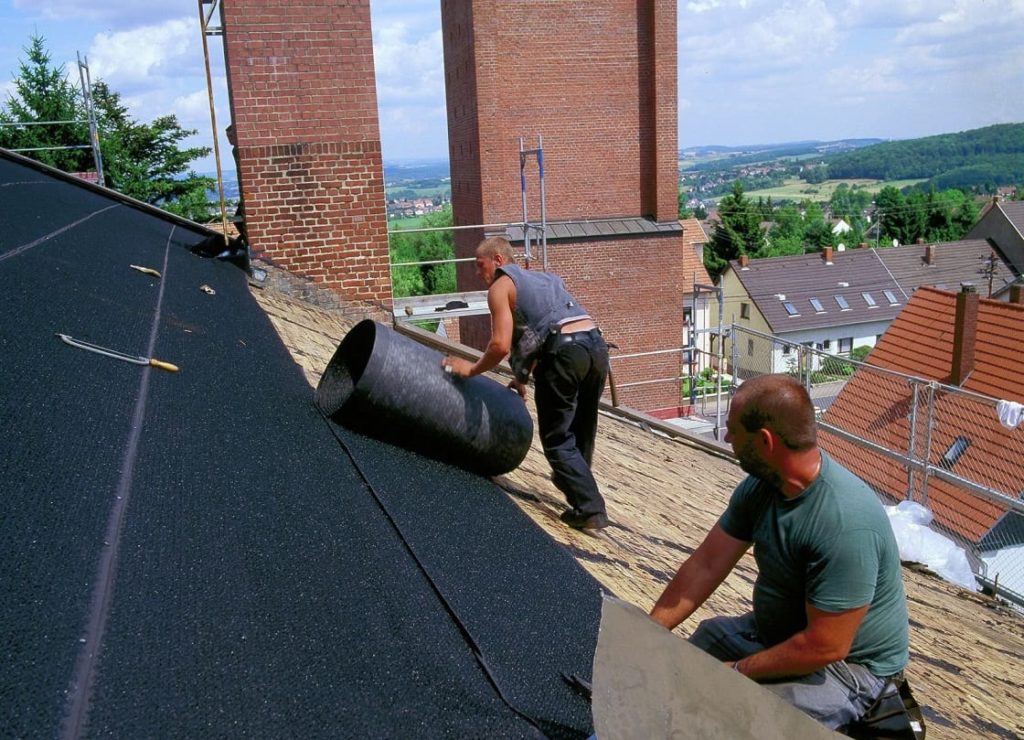
In turn, flat roofs are a monolithic solid surface. Here it is already possible to apply a variety of protection options - both rolled, and coated, and penetrating, and sprayed coating. At the same time, the waterproofing material of a flat roof can be immediately roofing and at the same time withstand both bad weather and mechanical stress.
Works in pools and artificial reservoirs
In this case, special solutions may be needed.The main problem is not only that the vertical walls are in constant contact with moisture, but also that it permanently exerts mechanical pressure on the entire structure. Thus, the deeper the pool or artificial pond, the greater the risk of hydraulic leakage due to increased pressure. Therefore, it is advisable to use reliable cement-based insulation materials for protection, which, moreover, must also firmly hold the cladding tile. Experts advise to trust such work exclusively to professionals in this field.
Wall and floor protection work in bathrooms
Here it is better to give preference to the painting method of waterproofing through the use of cold types of mastic. It is quite possible to apply it yourself using standard brushes. It is desirable to carry out the application in three layers, while entering the vertical wall can vary from three to twenty-five centimeters.
IMPORTANT! If the bathroom has a “warm floor” system, then it should be remembered that materials expand when heated and contract when cooled. Thus, the use of rigid protection based on a cement base is completely unacceptable, since it will quickly crack. It is best to apply pasting moisture insulation using sheet / roll material, while laying should “overlap” and be smeared at the seams with mastic or be sealed with special construction adhesive tape.
Rating of the best waterproofing for 2025
For swimming pools
2nd place: Plitonit Hydro Elast
Standard polymer mixture for waterproofing pools and artificial reservoirs of a small area.Works great on many hard bases, however, the difference in operating temperatures is small, which means it can only be used in the warm period. Not suitable for independent use.
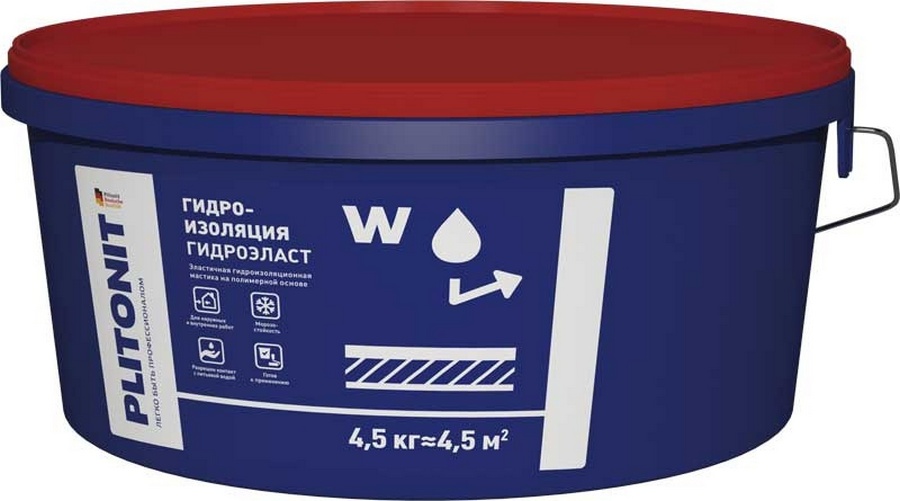
| Name | Index |
|---|---|
| Manufacturer country | Russia |
| Base used | Polymer |
| Base | Concrete, reinforced concrete, brick |
| Packing size, kg or l | 4 |
| Price, rubles | 1300 |
Advantages:
- Applicable to many hard base;
- Has a polymer base;
- Dries relatively quickly (2 days).
Flaws:
- High price for a small amount of sales packaging.
1st place: Penetron
Durable and frost-resistant material, extremely resistant not only to moisture, but also to caustic chemicals. It has increased adhesive (adhesion) properties - it perfectly holds facing tiles. At the same time, it can be used as a repair mixture for sealing active leaks.
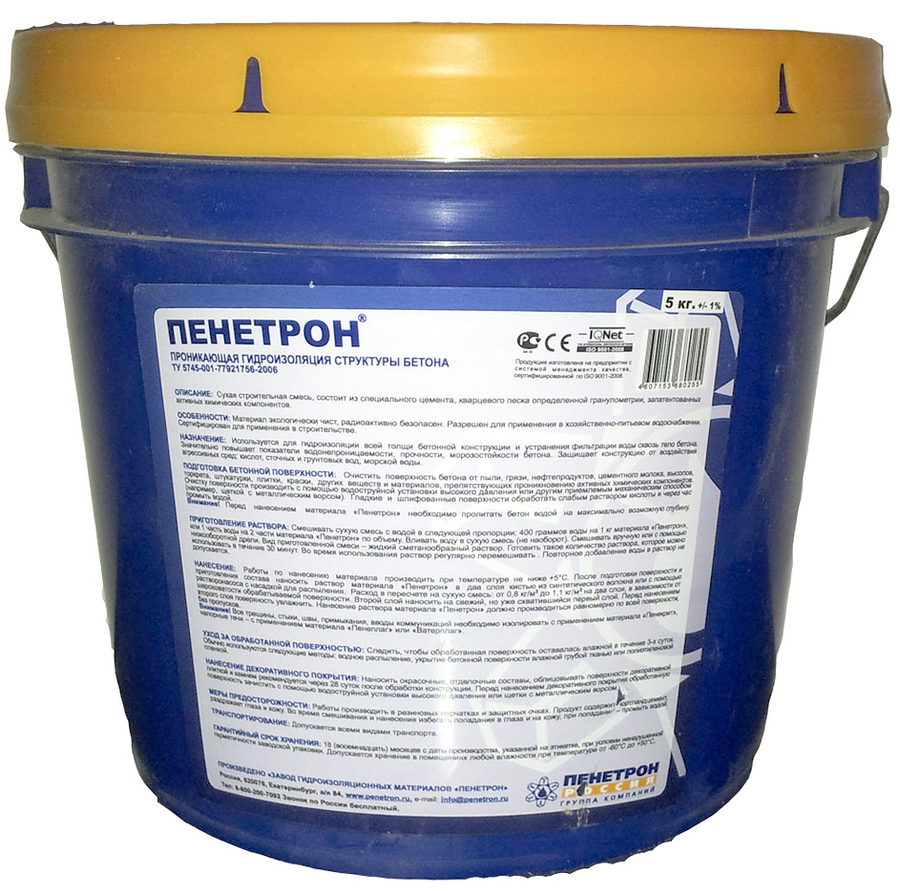
| Name | Index |
|---|---|
| Manufacturer country | Russia |
| Base used | Polymer |
| Base | Concrete, reinforced concrete |
| Packing size, kg or l | 5 |
| Price, rubles | 1800 |
Advantages:
- There is no unpleasant smell;
- Universal (can be used for repairs);
- Contains antibacterial ingredients.
Flaws:
- High consumption per unit area.
For bathrooms
2nd place: "Hydroflex" LITOKOL
One-component mixture, supplied in the form of a paste, based on synthetic resins. It does not contain third-party solvents and has an economical consumption per unit of cultivated area. The composition contains inert fillers, which means an increased service life.
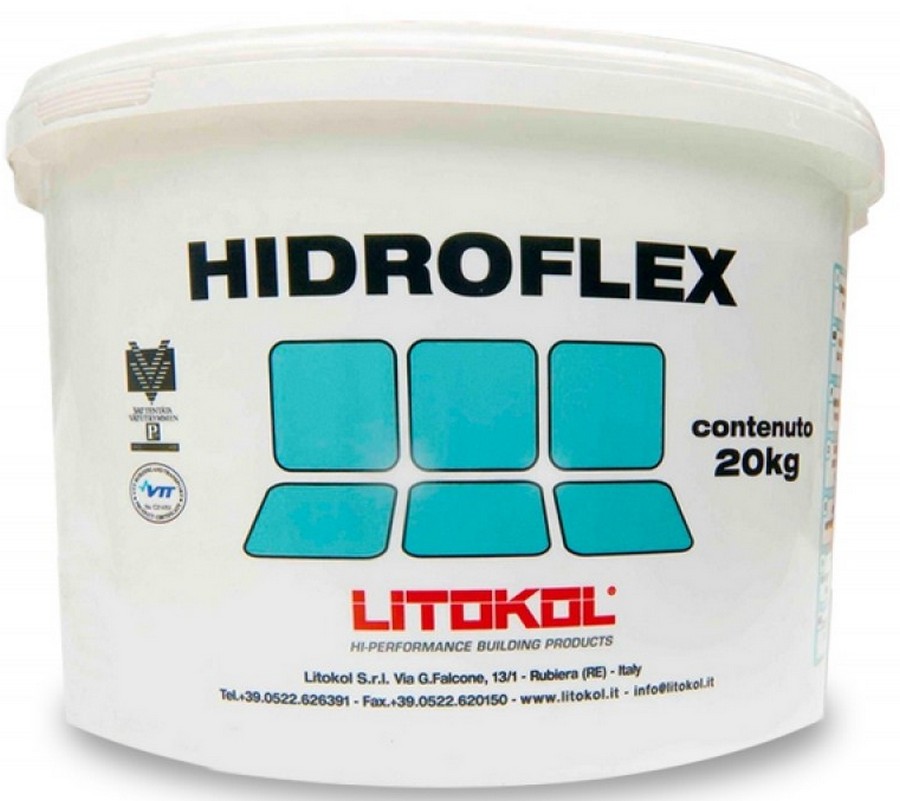
| Name | Index |
|---|---|
| Manufacturer country | Italy |
| Base used | Synthetic resins |
| Base | Concrete, brick |
| Packing size, kg or l | 5 |
| Price, rubles | 1500 |
Advantages:
- No need to use third party solvents;
- Economically spent;
- Has an acceptable price.
Flaws:
- Designed for small spaces only.
1st place: Kerakoll "Nanodefense Eco"
Ready-made composition using a water base. It is applied on the absorbing bases in rooms with the increased humidity. It can be used as a preliminary primer, on which tiles can later be fixed. It successfully resists not only moisture, but also steam (it can be used in saunas and baths).
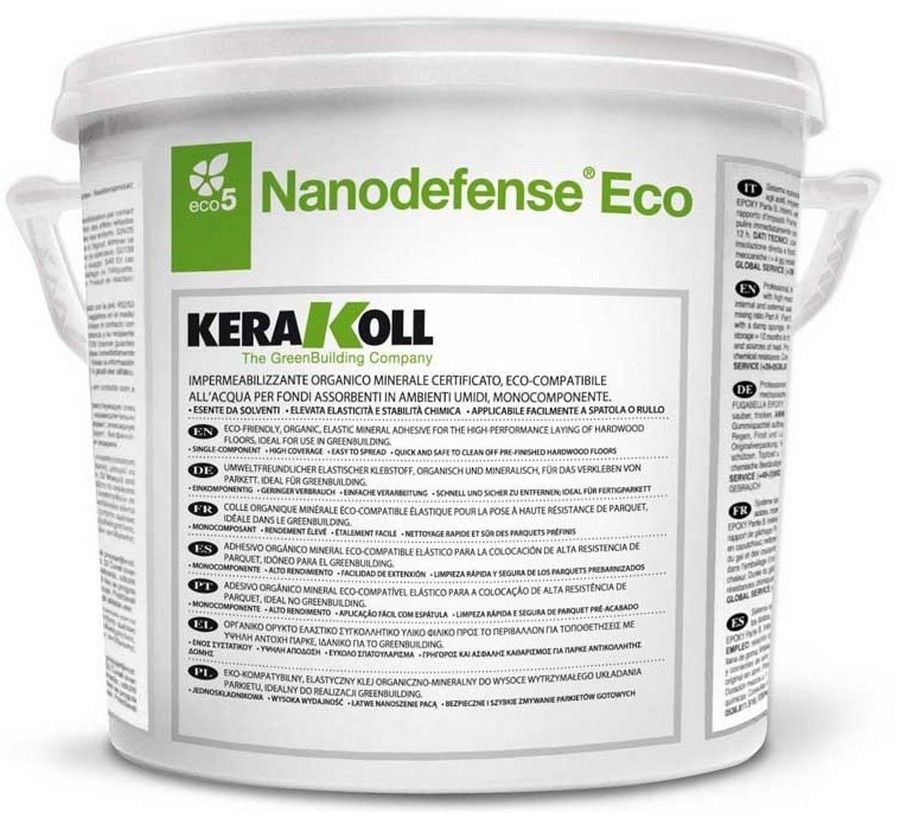
| Name | Index |
|---|---|
| Manufacturer country | Italy |
| Base used | Polyurethane |
| Base | Concrete, brick |
| Packing size, kg or l | 15 |
| Price, rubles | 9000 |
Advantages:
- Large volume of packing;
- Current price;
- Multifunctionality.
Flaws:
- Not found (for its segment).
For roofing
2nd place: Mastic "Slavyanka"
An inexpensive sample of bitumen-polymer mastic, perfect for all types of roofing. Works equally well on metal and wood. Use together with the reinforced fiberglass mesh or fiberglass is allowed. More focused on working on horizontal surfaces.
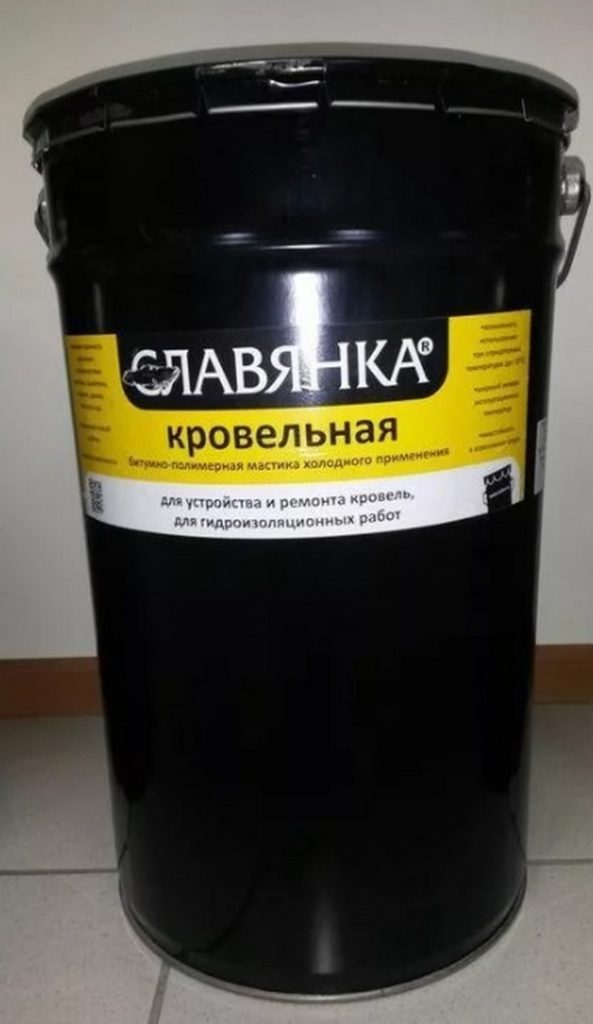
| Name | Index |
|---|---|
| Manufacturer country | Russia |
| Base used | bitumen polymer |
| Base | metal and wood |
| Packing size, kg or l | 20 |
| Price, rubles | 4000 |
Advantages:
- Large selling volume;
- Low price;
- Versatility of application.
Flaws:
- Focused on work on horizontal surfaces more.
1st place: TechnoNIKOL roll waterproofing for roofing
An excellent sample of domestic self-adhesive material for roofing.The composition includes a bitumen-polymer membrane that can retain a large amount of moisture. The roll is designed to cover both horizontal and vertical surfaces, which is ensured by a self-adhesive base.
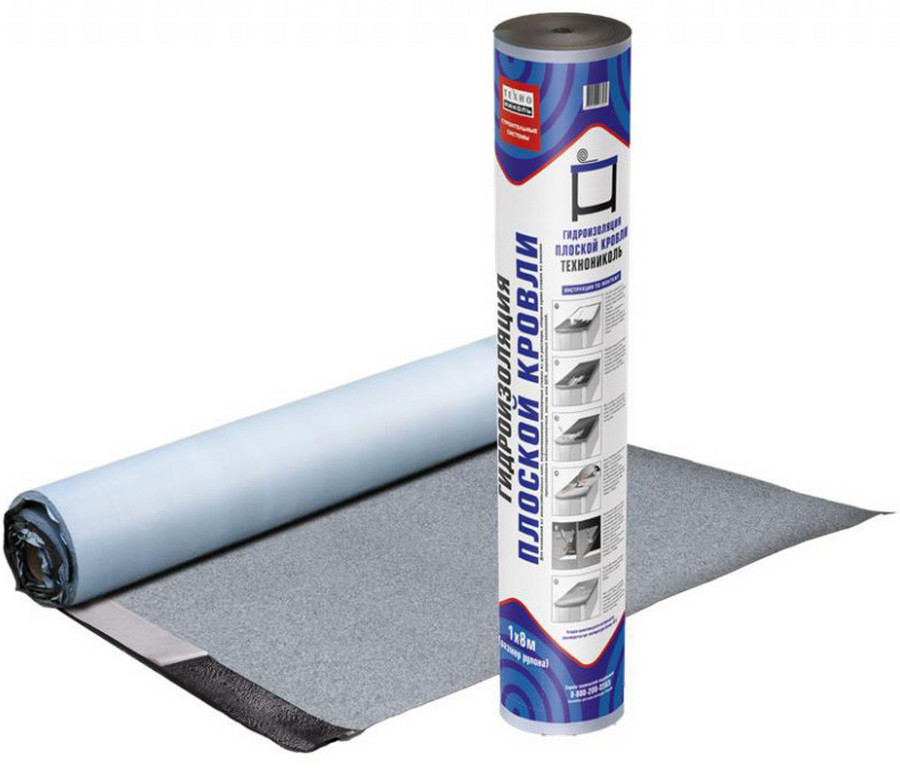
| Name | Index |
|---|---|
| Manufacturer country | Russia |
| Base used | polyester |
| Base | Metal, wood, reinforced concrete |
| Packing size, kg or l | 5 |
| Price, rubles | 2400 |
Advantages:
- Self-adhesive base;
- Increased operating temperature (up to +100 degrees Celsius);
- Convenient form of delivery.
Flaws:
- The small size of a roll on the covered area (1 m on 8 m).
For cellars
2nd place: PBK Liquid Hydroisol
A popular example of one-component polymer-bitumen rubber. Designed for waterproofing basements. Ideal for hard-to-reach areas and adheres well to any surface. Unpretentious to the harmful effects of the environment.
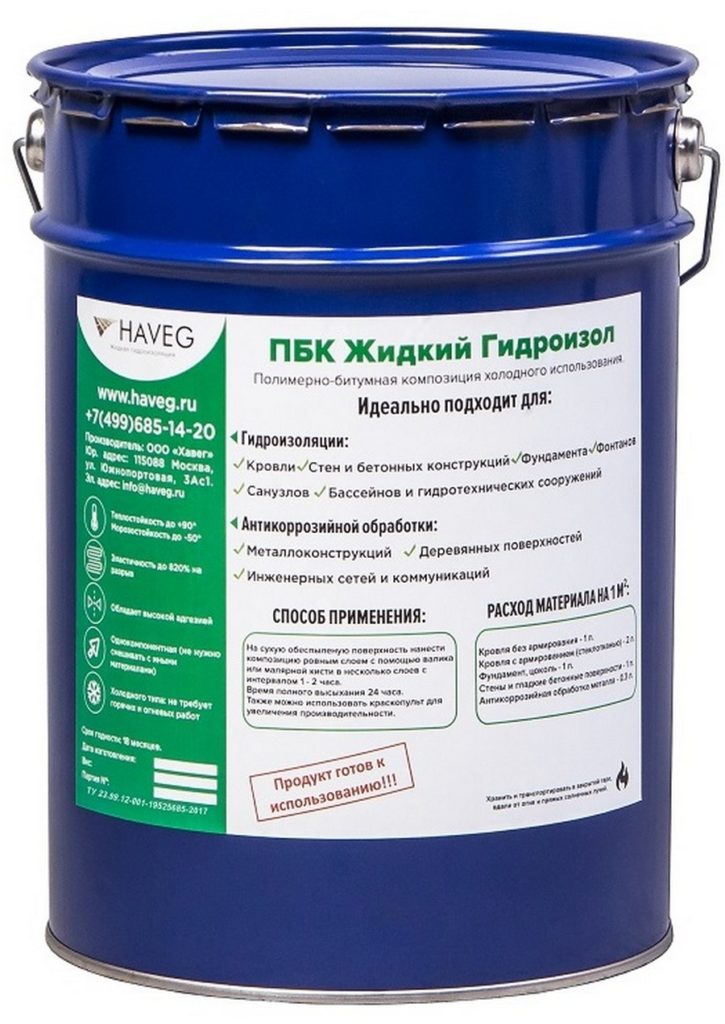
| Name | Index |
|---|---|
| Manufacturer country | Russia |
| Base used | Rubber (synthetic rubber) |
| Base | Concrete and reinforced concrete |
| Packing size, kg or l | 20 |
| Price, rubles | 2800 |
Advantages:
- Versatility;
- High level of adhesion with any surface;
- Can be used for hard to reach places.
Flaws:
- Not found.
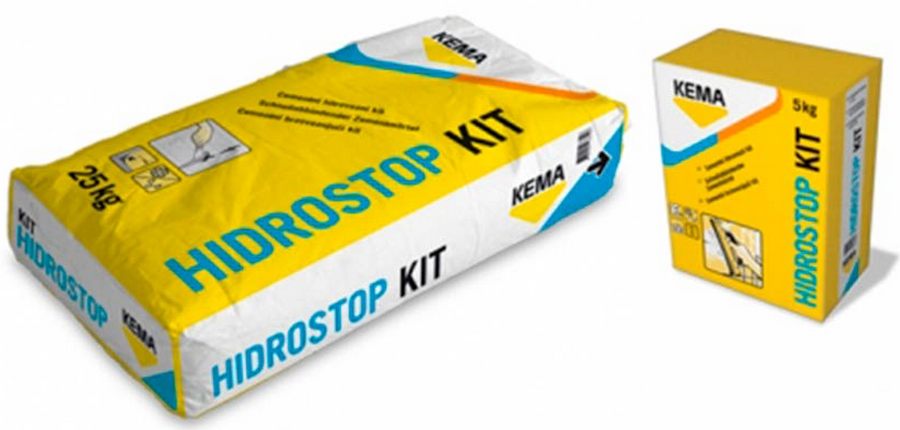
1st place: "HIDROSTOP KIT"
Great fast acting waterproofing compound - 20 minute dry time! Works great on both vertical and horizontal surfaces. Can be used as a repair material. Copes equally well with monolithic and prefabricated structures.
| Name | Index |
|---|---|
| Manufacturer country | Slovenia |
| Base used | Cement |
| Base | Concrete and reinforced concrete |
| Packing size, kg or l | 25 |
| Price, rubles | 2200 |
Advantages:
- Large selling volume;
- There is a polymineral base;
- Works on concrete and reinforced concrete.
Flaws:
- The composition is supplied in dry form, requires pre-mixing and thickening.
For foundation
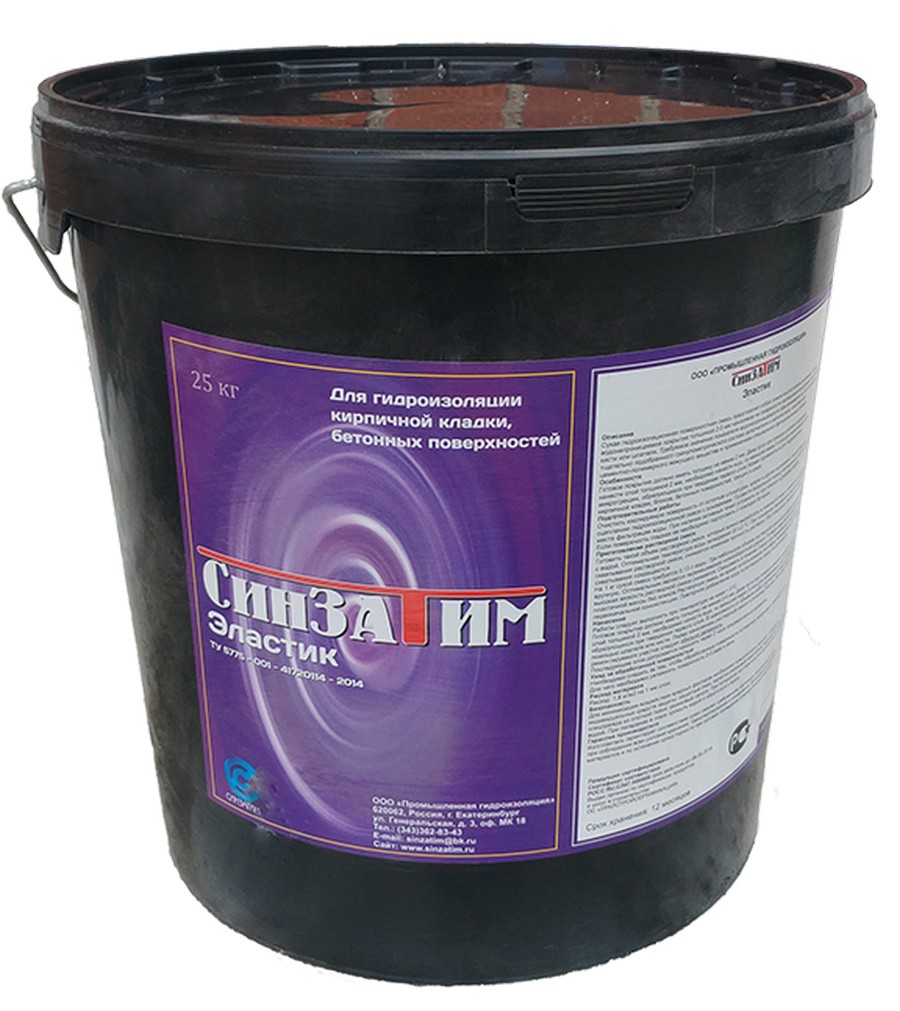
2nd place: Sinzatim Elastic (Barrier)
This mixture forms the thinnest multi-layer coating of 2-5 mm, which provides the necessary level of water resistance due to a special granular composition. The formula includes special antibacterial ingredients. The binder has increased functionality, already the second applied layer will completely eliminate microcracks and provide pore sealing.
| Name | Index |
|---|---|
| Manufacturer country | Russia |
| Base used | Cement-polymer |
| Base | Concrete and reinforced concrete |
| Packing size, kg or l | 25 |
| Price, rubles | 2200 |
Advantages:
- Excellent value for money;
- The composition uses an innovative formula of astringent;
- Variety of application (brush or spatula).
Flaws:
- Not found.
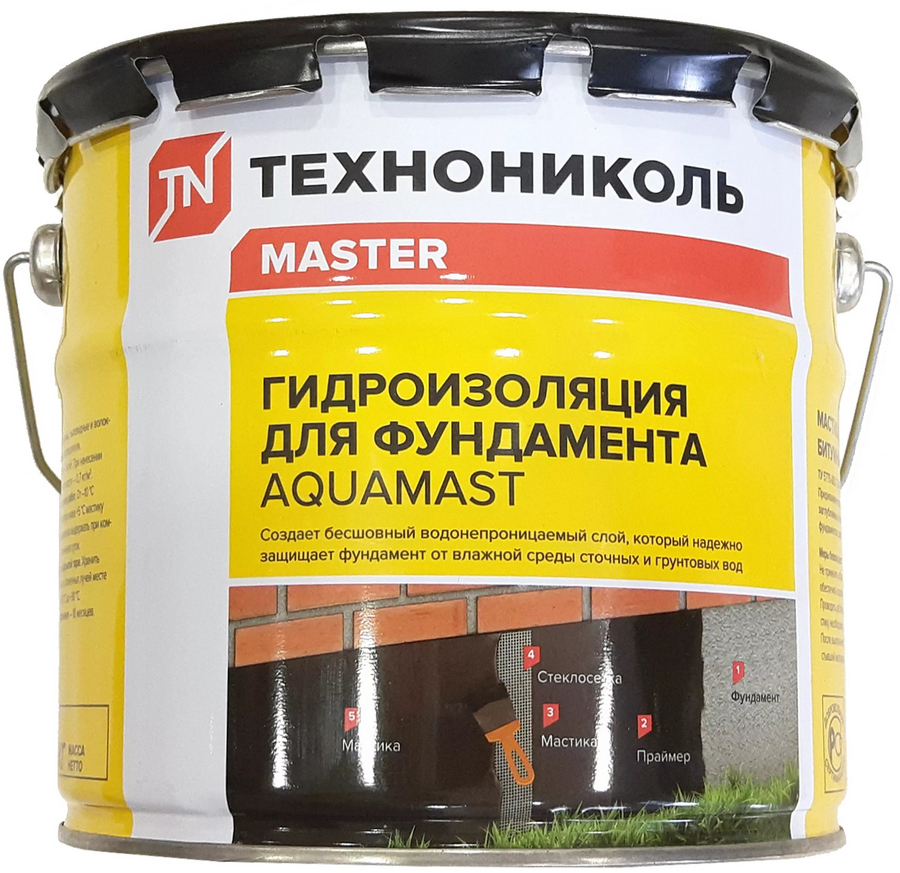
1st place: "AquaMast"
Excellent mastic for capital basement waterproofing. Supplied in an enlarged bulk container at a fairly budget price. It has a bituminous working base. It can be stored for a long time after opening the container (2 years). Fairly easy to use.
| Name | Index |
|---|---|
| Manufacturer country | Russia |
| Base used | Bituminous |
| Base | Concrete and reinforced concrete |
| Packing size, kg or l | 18 |
| Price, rubles | 1500 |
Advantages:
- Application variability;
- Large packing container;
- Current price.
Flaws:
- Rarely sold in retail stores.
Instead of an epilogue
The conducted market analysis shows that the domestic buyer prefers Russian-made waterproofing products. Unlike foreign samples, they are characterized by large sales volumes at fairly low prices. Thus, the Russians will prefer a foreign manufacturer only if this is due to a design need.
new entries
Categories
The best men's sneakers in 2025
Views: 124040
The Best Complex Vitamins in 2025
Views: 121944




Useful
Ranking of the best vacuum sealers for 2025
Views: 1939
Rating of the best electric hobs for 2025
Views: 2342

Best Antivirals in 2025
Views: 33336
Top 15 hoverboards of 2025. Decent value for money
Views: 29342
Popular Articles
-

Top ranking of the best and cheapest scooters up to 50cc in 2025
Views: 131655 -

Rating of the best soundproofing materials for an apartment in 2025
Views: 127696 -
Rating of cheap analogues of expensive medicines for flu and colds for 2025
Views: 124523 -
The best men's sneakers in 2025
Views: 124040 -
The Best Complex Vitamins in 2025
Views: 121944 -

Top ranking of the best smartwatches 2025 - price-quality ratio
Views: 114982 -

The best paint for gray hair - top rating 2025
Views: 113399 -
Ranking of the best wood paints for interior work in 2025
Views: 110323 -
Rating of the best spinning reels in 2025
Views: 105333 -

Ranking of the best sex dolls for men for 2025
Views: 104371 -

Ranking of the best action cameras from China in 2025
Views: 102221 -
The most effective calcium preparations for adults and children in 2025
Views: 102015